As you approach the final weeks of your pregnancy, it’s important to be aware of any symptoms that may indicate a potential complication. While many pregnancy symptoms are normal and expected, there are certain signs that should not be ignored. Paying attention to these red flags at 32 weeks of pregnancy can help ensure the well-being of both you and your baby.
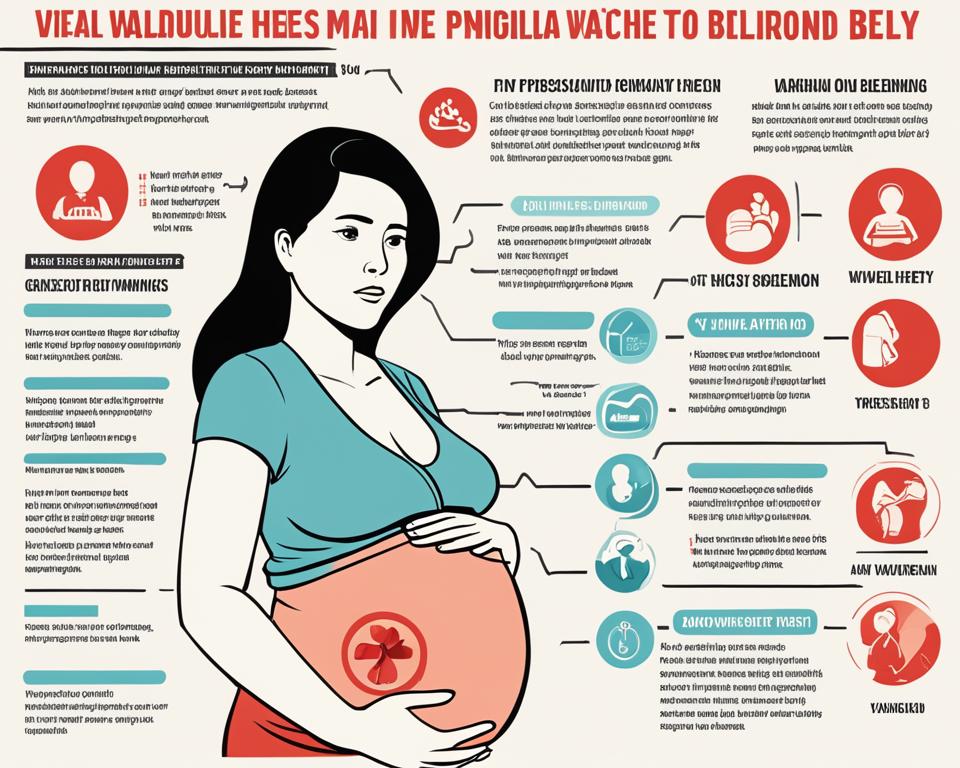
During the 32nd week of pregnancy, it’s vital to be aware of any concerning symptoms that may arise. Some of these symptoms may include vaginal spotting, persistent or severe vomiting, burning sensation while urinating, dizziness or faintness, lower abdominal pain, racing heart, severe headache, changes in eyesight, unusual weight gain and swelling, severe pain above the stomach, vaginal discharge, lower back pain, feeling the baby move less often, vaginal bleeding, and intense itching.
If you experience any of these symptoms, it is crucial to contact your healthcare provider for further evaluation. Your healthcare provider will be able to assess your symptoms, provide appropriate guidance, and ensure the health and safety of both you and your baby.
Key Takeaways:
- Pay attention to vaginal spotting, persistent or severe vomiting, burning sensation while urinating, dizziness or faintness, lower abdominal pain, racing heart, severe headache, changes in eyesight, unusual weight gain and swelling, severe pain above the stomach, vaginal discharge, lower back pain, feeling the baby move less often, vaginal bleeding, and intense itching at 32 weeks pregnant.
- If you experience any of these symptoms, contact your healthcare provider for further evaluation.
- Timely medical attention can help identify and address any potential complications.
- Don’t hesitate to seek professional help if you have concerns about your symptoms.
- Regular communication with your healthcare provider is essential for a healthy and safe pregnancy.
Vaginal Spotting
Vaginal spotting is a common occurrence during early pregnancy and is often referred to as implantation bleeding. It typically appears as light pink or brown discharge and lasts for a short duration. In most cases, spotting during pregnancy is not a cause for concern and does not pose any risk to the mother or baby.
However, it’s important to be aware that heavy vaginal spotting, especially when accompanied by other symptoms, could be an indication of a more serious condition. If you experience heavy vaginal spotting along with abdominal or pelvic pain, extreme lightheadedness, or shoulder pain, it’s crucial to seek medical attention.
The following conditions may be associated with heavy vaginal spotting during pregnancy:
- Ectopic Pregnancy: This occurs when a fertilized egg implants itself outside the uterus, usually in the fallopian tubes. It can lead to heavy bleeding and can be life-threatening if left untreated.
- Molar Pregnancy: This condition involves abnormal growth of placental tissue and can result in vaginal bleeding, often appearing as spotting.
- Cervical Infection: Infections in the cervix can cause bleeding, including spotting. Prompt medical attention is necessary to prevent complications.
If you experience heavy vaginal spotting during pregnancy, it’s important to contact your healthcare provider immediately. They can assess your condition, perform necessary tests, and provide appropriate treatment to ensure the well-being of both you and your baby.
Persistent or Severe Vomiting
While pregnant, many women experience nausea and vomiting, commonly known as morning sickness. However, for some women, the symptoms can be much more severe and persistent, indicating a condition called hyperemesis gravidarum.
Hyperemesis gravidarum is a rare condition characterized by excessive vomiting, leading to dehydration and weight loss. It can be very uncomfortable and debilitating for pregnant women. If you find yourself experiencing persistent vomiting during pregnancy, it’s essential to consult your healthcare provider for a proper diagnosis and treatment.
Severe morning sickness can have a significant impact on a woman’s quality of life. It can make it difficult to keep food down, leading to nutritional deficiencies and potential complications for both the mother and the unborn baby. Seeking medical attention is crucial to manage the symptoms effectively.
Some key characteristics of hyperemesis gravidarum include:
- Severe and persistent vomiting
- Weight loss of more than 5% of pre-pregnancy weight
- Dehydration
- Electrolyte imbalances
- Feeling lightheaded or faint
- Dark-colored urine
- Vomiting blood
If you experience any of these symptoms, it’s important to seek medical attention promptly. Your healthcare provider will evaluate your condition, rule out any other underlying causes, and develop a suitable treatment plan.
There are various treatment options available to manage hyperemesis gravidarum, including dietary changes, medication, intravenous fluids, and hospitalization in severe cases. Your healthcare provider will guide you through the best course of action based on the severity of your symptoms and overall health.
Remember, persistent vomiting during pregnancy is not normal and should not be ignored. Seeking appropriate medical care can help alleviate discomfort and ensure the well-being of both you and your baby.
| Signs of Hyperemesis Gravidarum | Actions to Take |
|---|---|
| Severe and persistent vomiting | Contact your healthcare provider for evaluation and treatment |
| Weight loss of more than 5% of pre-pregnancy weight | Seek medical attention to prevent complications |
| Dehydration | Hydrate with fluids as per your healthcare provider’s recommendations |
| Electrolyte imbalances | Consult your healthcare provider for appropriate management |
| Feeling lightheaded or faint | Inform your healthcare provider to assess your symptoms |
| Dark-colored urine | Discuss this symptom with your healthcare provider |
| Vomiting blood | Seek immediate medical attention |
Burning Sensation While Urinating
Feeling a burning sensation while urinating or having an increased urge to urinate can be a sign of a urinary tract infection (UTI), especially if it is accompanied by other symptoms such as fever, chills, or blood-tinged urine. It’s important to contact your healthcare provider if you experience these symptoms so that a UTI can be diagnosed and treated to avoid complications. It’s worth noting that frequent urination is also a common pregnancy symptom, so it’s important to differentiate between normal pregnancy-related frequent urination and a potential UTI.
| Signs of Burning Urination During Pregnancy | Possible Causes |
|---|---|
| Burning sensation while urinating | Urinary tract infection (UTI) |
| Increased urge to urinate | Bladder irritation, UTI |
| Discomfort or pain in the lower abdomen | UTI, kidney stones |
| Cloudy or strong-smelling urine | UTI, dehydration |
| Blood or blood-tinged urine | UTI, kidney or bladder infection |
| Lower back or pelvic pain | UTI, kidney infection |
Dizziness or Faintness
Feeling lightheaded or dizzy during pregnancy is a common symptom, especially in the second trimester. However, persistent dizziness or faintness should not be ignored, as it may indicate an underlying issue that requires attention. If you experience dizziness accompanied by other symptoms such as blurred vision, vaginal bleeding, headaches, or abdominal pain, it’s important to contact your healthcare provider for further evaluation and treatment.
During pregnancy, hormonal changes and an increase in blood volume can affect blood pressure and circulation, leading to occasional bouts of dizziness. However, if dizziness becomes frequent or severe, it may be a cause for concern. Your healthcare provider can help determine the underlying cause and provide appropriate guidance to ensure your well-being and the health of your baby.
Common Causes of Dizziness During Pregnancy
- Hormonal changes: Fluctuations in hormone levels, particularly progesterone, can affect blood vessels and contribute to dizziness.
- Low blood pressure: During pregnancy, blood pressure may decrease, especially around the 24th to 28th week. This can result in dizziness or lightheadedness.
- Anemia: Iron deficiency anemia is common during pregnancy and can cause dizziness and fatigue.
- Dehydration: Inadequate fluid intake can lead to dehydration, which can trigger dizziness.
- Hypoglycemia: Low blood sugar levels can cause dizziness and faintness.
Managing Dizziness and Faintness During Pregnancy
If you experience dizziness, try these tips to alleviate symptoms:
- Stay hydrated by drinking plenty of water throughout the day.
- Avoid standing or sitting for long periods. Take breaks and move around to improve circulation.
- When rising from a lying or sitting position, do so slowly to prevent a sudden drop in blood pressure.
- Eat small, frequent meals to maintain blood sugar levels.
- Avoid overheating by dressing in loose, breathable clothing and avoiding hot environments.
- Use support stockings to improve circulation.
Lower Abdominal Pain
Lower abdominal pain is a common symptom experienced during pregnancy. Often, this pain can be attributed to round ligament pain, which is a normal discomfort caused by the stretching and movement of the ligaments supporting the uterus. Round ligament pain typically presents as a sharp or stabbing pain on one or both sides of the lower abdomen.
If you are experiencing lower abdominal pain, it is important to know that mild to moderate discomfort is generally considered normal. However, if the pain is severe and accompanied by other symptoms such as fever or chills, it may indicate a more serious condition that requires medical attention.
If you are experiencing lower abdominal pain during pregnancy and any of the following symptoms, it is advisable to contact your healthcare provider:
- Severe abdominal pain
- Abdominal pain accompanied by fever or chills
Your healthcare provider will be able to assess your symptoms, perform any necessary tests, and provide appropriate treatment or recommendations to ensure your health and the well-being of your baby.
It’s always best to consult with your healthcare provider for any concerns or questions regarding abdominal pain or any other discomforts experienced during pregnancy.
Racing Heart
During pregnancy, it’s normal for your heart to beat faster than usual. This is because your body needs to pump more blood to support the growing baby and meet the increased demand for oxygen and nutrients. However, if you notice that your heart rate is continuously elevated and you experience symptoms such as shortness of breath, it’s important to consult your healthcare provider.
Racing heart, also known as tachycardia, can occur during pregnancy due to hormonal changes and increased blood volume. In most cases, it is not a cause for concern and usually resolves on its own. However, in some instances, it may be a sign of an underlying issue that requires medical attention.
If your racing heart is accompanied by symptoms such as chest pain, dizziness, fainting, or palpitations (sensations of a fast or irregular heartbeat), it’s important to seek medical advice. Your healthcare provider can evaluate your symptoms, perform diagnostic tests if necessary, and ensure that there are no underlying cardiovascular conditions causing the racing heart.
Causes of Racing Heart during Pregnancy
The increased heart rate during pregnancy can be attributed to various factors:
- Hormonal changes: Hormones like estrogen and progesterone are essential for maintaining a healthy pregnancy. However, they can also affect your heart, causing it to beat faster.
- Increased blood volume: Your body produces more blood during pregnancy to support the needs of both you and your baby. This leads to a higher volume of blood that needs to be pumped by the heart, resulting in an increased heart rate.
- Physical exertion: Pregnancy can make everyday tasks feel more challenging, leading to increased exertion and a faster heart rate.
- Anxiety or stress: Pregnancy can bring about a range of emotions, and anxiety or stress can trigger a racing heart.
While racing heart during pregnancy is often benign, it’s still essential to report any concerning symptoms to your healthcare provider. They can assess your condition, rule out any underlying issues, and provide appropriate guidance or treatment if necessary.
Severe Headache
Headaches are a common occurrence during pregnancy and can be attributed to various factors such as hormonal changes, stress, and fatigue. Most headaches experienced during pregnancy are typically mild and can be managed through rest, hydration, and over-the-counter pain medications recommended by your healthcare provider.
However, it’s important to be aware that severe or persistent headaches during pregnancy may indicate an underlying health concern that requires medical attention. In some cases, these headaches can be a sign of high blood pressure or a condition called preeclampsia.
Preeclampsia is a serious condition that typically develops after the 20th week of pregnancy and is characterized by high blood pressure and damage to organs such as the liver and kidneys. Severe headaches can be one of the symptoms of preeclampsia, along with other signs like swelling, blurred vision, and abdominal pain.
If you experience a severe headache that is accompanied by any of these symptoms, it’s crucial to contact your healthcare provider immediately for further evaluation. Your healthcare provider will be able to assess your condition, monitor your blood pressure, and recommend appropriate treatment options to ensure the well-being of both you and your baby.
Remember, it’s essential to prioritize your health and seek prompt medical attention if you experience severe headaches during pregnancy. Your healthcare provider is the best resource to provide guidance and support throughout your pregnancy journey.
Changes in Eyesight
During pregnancy, some women may experience changes in their eyesight. These changes can include temporary loss of vision, blurred vision, or light sensitivity. While these symptoms can be concerning, they may be linked to complications such as gestational hypertension or preeclampsia.
If you notice any changes in your vision during pregnancy, it’s essential to mention them to your healthcare provider. They can evaluate your symptoms and determine if further evaluation and appropriate management are necessary.
Unusual Weight Gain and Swelling
Sudden, significant weight gain that is not related to overeating and is accompanied by swelling (edema) of the face and hands may be a sign of preeclampsia. While some swelling of the feet or hands can be normal during pregnancy, it should be monitored. If you notice excessive weight gain and swelling, it’s important to consult your healthcare provider to rule out preeclampsia and ensure your well-being.
During pregnancy, it’s common to experience changes in your body, including weight gain and swelling. However, unusual weight gain and excessive swelling can be a cause for concern. Preeclampsia is a serious condition that affects some pregnant women and typically occurs after the 20th week of pregnancy. It is characterized by high blood pressure, protein in the urine, and sometimes, swelling of the hands and face.
Preeclampsia can lead to complications for both the mother and the baby if left untreated. It is important to recognize the warning signs and seek medical attention if you experience significant weight gain and swelling. Other symptoms of preeclampsia may include severe headaches, vision changes, abdominal pain, and nausea or vomiting.
Your healthcare provider will be able to assess your symptoms, perform the necessary tests, and provide appropriate management to ensure the best possible outcome for you and your baby. Regular prenatal care and monitoring are essential in detecting and managing preeclampsia.
Managing Edema During Pregnancy
In addition to preeclampsia, there are other causes of swelling during pregnancy, such as normal fluid retention and hormonal changes. However, if you’re experiencing discomfort or have concerns about your swelling, there are some measures you can take to manage edema:
- Elevate your legs whenever possible to reduce swelling.
- Wear comfortable, supportive shoes that are not too tight.
- Avoid standing or sitting for prolonged periods of time.
- Stay hydrated and drink plenty of water.
- Limit your intake of salty foods, as excessive salt can contribute to swelling.
- Engage in regular physical activity, such as walking or swimming, to improve circulation.
It’s important to remember that some swelling during pregnancy is normal and usually harmless. However, if you have any concerns or notice any sudden or severe changes in your swelling or weight gain, it’s always best to consult your healthcare provider for further evaluation and guidance.
| Signs and Symptoms of Preeclampsia | Normal Pregnancy Changes |
|---|---|
| High blood pressure | No high blood pressure |
| Protein in the urine | No protein in the urine |
| Sudden weight gain | Gradual weight gain |
| Swelling of hands and face | Mild swelling of feet or hands |
| Severe headaches | Occasional headaches |
| Changes in vision | No changes in vision |
| Abdominal pain | No abdominal pain |
| Nausea or vomiting | No nausea or vomiting |
Vaginal Discharge, Lower Back Pain, Feeling Baby Move Less Often, Vaginal Bleeding, Itching
As you enter the third trimester of your pregnancy, there are a few more symptoms to be mindful of. Changes in vaginal discharge are common during pregnancy, but if you notice any concerning changes, it’s important to reach out to your healthcare provider. Similarly, lower back pain is a frequent complaint in pregnancy, but severe or persistent pain should be addressed by your healthcare provider for proper evaluation and management.
Feeling the baby move less often can cause worry. While it’s normal for fetal movements to change as you get closer to your due date, if you notice a significant decrease in the baby’s activity, it’s crucial to contact your healthcare provider to ensure everything is fine.
While some spotting can be normal, vaginal bleeding during pregnancy should always be taken seriously. If you experience any bleeding, even if it’s light, it’s important to contact your healthcare provider to rule out any potential complications. Lastly, intense itching can be a sign of a condition called cholestasis, which requires medical attention. If you find yourself experiencing persistent itching, it’s crucial to reach out to your healthcare provider for an evaluation.
FAQ
What are the symptoms of vaginal spotting during pregnancy?
Vaginal spotting can be normal during early pregnancy, known as implantation bleeding. However, if the spotting is heavy and accompanied by other symptoms such as abdominal or pelvic pain, extreme lightheadedness, or shoulder pain, it may indicate a more serious condition such as an ectopic pregnancy, molar pregnancy, or cervical infection. It’s important to contact your healthcare provider if you experience heavy vaginal spotting.
Why is persistent or severe vomiting a concern during pregnancy?
While vomiting and nausea are common during pregnancy, severe and persistent vomiting, especially when accompanied by other symptoms like dizziness or bloody vomit, may indicate a rare condition called hyperemesis gravidarum. This condition requires medical attention. If you experience severe vomiting, it’s important to consult your healthcare provider to rule out any serious complications and receive appropriate treatment for the nausea.
What does a burning sensation while urinating during pregnancy indicate?
Feeling a burning sensation while urinating or having an increased urge to urinate can be a sign of a urinary tract infection (UTI), especially if it is accompanied by other symptoms such as fever, chills, or blood-tinged urine. It’s important to contact your healthcare provider if you experience these symptoms so that a UTI can be diagnosed and treated to avoid complications. It’s worth noting that frequent urination is also a common pregnancy symptom, so it’s important to differentiate between normal pregnancy-related frequent urination and a potential UTI.
When should dizziness or faintness be a concern during pregnancy?
Feeling lightheaded or dizzy during pregnancy can be normal, especially in the second trimester. However, if dizziness persists, you feel faint, or if it is accompanied by other symptoms such as blurred vision, vaginal bleeding, headaches, or abdominal pain, it’s important to contact your healthcare provider. These symptoms may indicate an underlying issue that requires further evaluation and treatment.
Is lower abdominal pain normal during pregnancy?
Lower abdominal pain is common during pregnancy and can be attributed to round ligament pain, which is normal discomfort. However, if abdominal pain is severe and accompanied by fever or chills, it may be a sign of a more serious condition. In this case, it’s best to contact your healthcare provider to assess the situation and seek appropriate treatment.
Why should a racing heart be a cause for concern during pregnancy?
It’s normal for the heart to beat faster during pregnancy to accommodate the increased blood flow. However, if you feel that your heart rate is continuously elevated and accompanied by symptoms such as shortness of breath, it’s important to contact your healthcare provider. They can evaluate your symptoms and ensure that there is no underlying issue that needs attention.
What causes severe headaches during pregnancy?
Headaches are common during pregnancy and are often caused by hormonal changes, stress, and fatigue. However, if a headache is severe or persistent, it may be a sign of high blood pressure or preeclampsia, a serious condition that can occur after 20 weeks of pregnancy. It’s crucial to seek medical treatment to protect your health and the health of your baby if you experience severe headaches.
Should changes in eyesight be a cause for concern during pregnancy?
Changes in eyesight during pregnancy, such as temporary loss of vision, blurred vision, or light sensitivity, may be linked to complications like gestational hypertension or preeclampsia. It’s important to mention these changes to your healthcare provider for further evaluation and appropriate management if needed.
When should unusual weight gain and swelling be a concern during pregnancy?
Sudden, significant weight gain that is not related to overeating and is accompanied by swelling (edema) of the face and hands may be a sign of preeclampsia. While some swelling of the feet or hands can be normal during pregnancy, it should be monitored. If you notice excessive weight gain and swelling, it’s important to consult your healthcare provider to rule out preeclampsia and ensure your well-being.
What symptoms during the third trimester should I be aware of?
Other symptoms to watch for during the third trimester include changes in vaginal discharge, lower back pain, feeling the baby move less often, vaginal bleeding, and itching. While some changes in vaginal discharge and lower back pain are normal during pregnancy, it’s important to contact your healthcare provider if there are any concerning changes or if you experience vaginal bleeding, feeling the baby move less frequently, or intense itching. These symptoms may indicate potential complications that need to be evaluated and treated promptly.