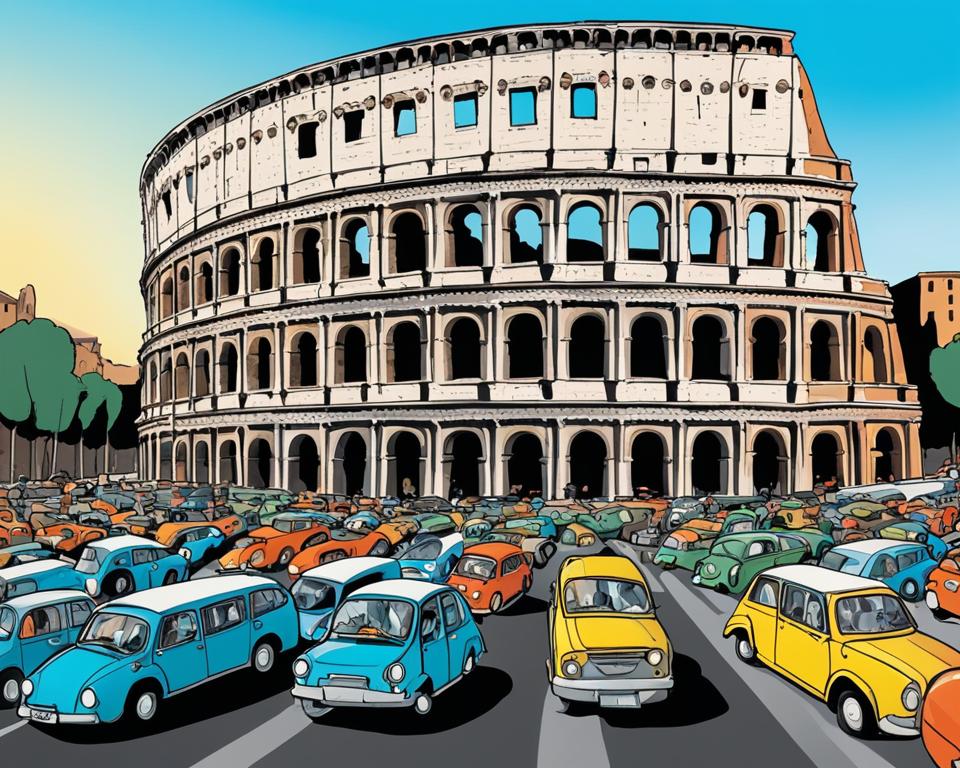
Driving in Rome can be an exciting adventure, but it’s important to be aware of the rules and regulations that govern the city’s streets. In this article, we will explore the traffic rules in Italy, driving regulations in Rome, road signs in Rome, and provide valuable tips and experiences for driving in the Eternal City. Whether you’re a local or a visitor, knowing the ins and outs of driving in Rome will help ensure a smooth and safe journey.
- Familiarize yourself with the traffic rules and regulations of Italy before driving in Rome.
- Understand the unique driving norms in Rome, including aggressive driving and pedestrian right-of-way.
- Navigate the ZTL zones (restricted traffic zones) in Rome carefully to avoid fines.
- Explore the parking options available in Rome, including white lined parking spaces, blue lined parking spaces, and parking garages.
- Learn the language of the horn as it is used for communication on the city’s streets.
Understanding Driving Norms in Rome
Driving in Rome requires an understanding of the unique driving norms in the city. The traffic in Rome can be aggressive, with drivers squeezing together in a symphony of sorts. Hesitation is not advisable, as it can lead to accidents.
One of the key aspects to be aware of is pedestrian right-of-way. In Rome, pedestrians often have the right-of-way, especially when encountering white pedestrian lines without a signal light. It’s important to yield to pedestrians and give them priority to ensure their safety.
When it comes to parking in Rome, knowing the different options can make a significant difference. Here are some parking options you’ll encounter in the city:
- White lined parking: These spaces are free but highly sought after. They can be found along the streets, but they fill up quickly.
- Blue lined parking: These spaces require payment. You can obtain parking passes from nearby parking meters. Be sure to display the pass clearly to avoid fines.
- Parking garages: These offer a convenient option for parking in Rome. Rates may vary based on the size of your vehicle.
- “Other” parking options: It’s important to note that double parking or parking on the curb are illegal and can result in fines.
Navigating the unique driving norms, giving pedestrians right-of-way, and understanding the various parking options in Rome will help make your driving experience in the city safer and more enjoyable.
Navigating ZTL Zones in Rome
One of the challenges of driving in Rome is navigating the ZTL (restricted traffic) zones. These zones are active at certain times and are strictly enforced. It is important to know the difference between Varco Attivo (active gate) and Varco Non-Attivo (non-active gate) before entering these zones. Violating the ZTL zones can result in fines, so it is crucial to be aware of their location and operating hours. The Roma Mobilita website provides detailed information and a map of the ZTL zones in Rome.
To avoid fines and disruptions to your journey, understanding and adhering to the ZTL regulations is essential. Here is a table highlighting the key aspects of ZTL zones in Rome:
| Term | Definition |
|---|---|
| Restricted Traffic Zones (ZTL) | Zones in Rome where traffic is restricted during designated hours. |
| Varco Attivo (Active Gate) | Entrance to a ZTL zone that is currently active. |
| Varco Non-Attivo (Non-Active Gate) | Entrance to a ZTL zone that is currently inactive. |
By familiarizing yourself with the ZTL zones and their operating hours, you can navigate Rome more effectively and avoid unnecessary fines. Remember to always check the Roma Mobilita website for the most up-to-date information on ZTL zones. Here’s an image illustrating the ZTL zones in Rome:
Quote from Local Expert:
“Navigating the ZTL zones in Rome can be challenging for drivers who are unfamiliar with the city’s regulations. It is important to plan your route in advance and be vigilant of the Varco Attivo and Varco Non-Attivo signs. Violating the ZTL zones can result in hefty fines, so always prioritize compliance to avoid any issues during your time in Rome.” – Roberto Rossi, Rome Resident
Parking in Rome
Finding parking in Rome can be a challenge, but knowing the different options available can help you navigate the city’s bustling streets. From white lined parking to blue lined parking, as well as parking garages and “other” parking options, there are various choices to consider.
White lined parking spaces are highly coveted as they are free. These spaces can be found along the streets of Rome, but they are limited and tend to fill up quickly. If you’re lucky enough to find an available white lined parking space, make sure to adhere to any parking restrictions and time limits.
On the other hand, blue lined parking spaces require payment. To park in these spaces, you’ll need to obtain a parking pass from nearby parking meters. The cost will depend on the duration of your stay. Be sure to check the parking meter for instructions and pay the appropriate amount to avoid any fines.
Parking garages provide a convenient option for parking in Rome. They offer a safe and secure place to leave your vehicle, especially if you’re planning to explore the city on foot. Rates at parking garages vary based on the size of your vehicle and the duration of your stay. It’s advisable to research nearby parking garages and their prices in advance.
While there may be “other” parking options available, such as double parking or parking on the curb, it’s important to note that these practices are illegal and can result in fines. It’s best to avoid these options and park in designated areas to ensure compliance with parking regulations.
Overall, planning ahead and being aware of the different parking options in Rome can help make your driving experience in the city more convenient and stress-free.
Comparison of Parking Options in Rome
| Parking Option | Description | Cost | Availability |
|---|---|---|---|
| White Lined Parking | Free street parking | Free | Limited availability |
| Blue Lined Parking | Paid parking with parking pass | Varies based on duration | Available throughout the city |
| Parking Garages | Secure parking facilities | Varies based on size and duration | Available in various locations |
| “Other” Parking | Illegal parking options (double parking, curb parking) | May result in fines | N/A |
The Language of the Horn
In Rome, the sound of a car horn isn’t just noise; it’s a form of communication. Understanding how to interpret and utilize horn signals is essential for navigating the bustling streets of the Eternal City. Horn usage in Rome goes beyond emergencies and annoyance – it serves as a means of expressing intentions, emotions, and urgency. Let’s explore the unique language of the horn in Rome and its role in communication on the road.
When driving in Rome, you’ll encounter various horn signals that convey different messages. A short toot is often used to signal impatience or to get someone’s attention. It could be a gentle reminder to the car in front of you to move or a way to catch a pedestrian’s attention while crossing the street. It’s essential to use these signals sparingly and responsibly, keeping in mind the cultural context and avoiding unnecessary noise pollution.
On the other hand, a long and sustained honk typically indicates urgency or a warning. This type of honk is more commonly used in situations that require immediate attention, such as avoiding a potential collision or alerting other drivers of a hazardous condition ahead. While road rage is prevalent in some places, Rome’s horn culture revolves more around passion and expression rather than aggression or violence.
The language of the horn in Rome is deeply intertwined with the city’s vibrant and lively atmosphere. It reflects the passionate nature of its people and serves as a way to communicate their emotions and intentions while driving. It’s essential to approach horn usage with respect and understanding, recognizing that it is an integral part of Roman driving culture.
“Horns are not just for cars, but an essential way for Romans to communicate on the roads. Understanding the language of the horn is crucial for navigating the city’s bustling streets with finesse and respect for local customs.” – Local Roman driver
By familiarizing yourself with the language of the horn and incorporating it into your driving experience, you can better navigate the streets of Rome and communicate effectively with other drivers. Embrace the passionate symphony of horns as you explore the city’s historical sites, charming neighborhoods, and bustling streets.
| Horn Signal | Meaning |
|---|---|
| Short Toot | Impatience, getting someone’s attention |
| Long Honk | Urgency, warning |
Renting a Car in Rome
If you’re visiting Rome and need a car, renting one from a reliable car rental company is a convenient option. Rome offers a variety of rental car companies to choose from, giving you the flexibility to explore the city and its surrounding areas at your own pace.
“Renting a car in Rome allows you to have the freedom to explore the beautiful countryside and nearby attractions without relying on public transportation.”
When choosing a rental car, it’s important to consider the city’s unique challenges, such as parking limitations and narrow streets. Opting for the smallest car that meets your needs can make navigating Rome’s roads and finding parking spaces easier. Keep in mind that larger cars may be more difficult to maneuver and find parking for in the city center.
Choosing the Right Car
When selecting a rental car in Rome, consider the following factors:
- Size: Rent the smallest car that comfortably accommodates your travel needs.
- Fuel Efficiency: Consider opting for a car with good fuel efficiency to save money on gas expenses during your trip.
- Features: Determine which features are important to you, such as air conditioning or a GPS system, and choose a car that meets your requirements.
- Budget: Set a budget for your rental car and compare prices from different rental companies to find the best deal.
International Drivers Permit
If you plan to drive in Italy, including Rome, it is essential to have an International Drivers Permit (IDP) along with your valid driver’s license. The IDP serves as a translation of your license and is required by law.
You can easily obtain an IDP from many AAA locations in the United States. Remember to bring your valid U.S. driver’s license and a passport-sized photograph to complete the application process.
It is important to keep both your U.S. license and International Drivers Permit together while driving in Italy.
| Rental Car Companies in Rome | Contact Information | Website |
|---|---|---|
| Hertz | +39 06 6501 2120 | www.hertz.com |
| Avis | +39 06 6562 6608 | www.avis.com |
| Europcar | +39 06 6501 5245 | www.europcar.com |
| Enterprise | +39 06 6562 6608 | www.enterprise.com |
Remember, renting a car in Rome can be a convenient way to explore the city and its surroundings. Choose the right car and obtain the necessary documents to ensure a smooth and enjoyable driving experience in the Eternal City.
Do You Need to Drive in Rome?
Deciding whether you need to drive in Rome depends on various factors. If your hotel is not served by public transport or if you plan to visit offbeat areas or take day trips, driving in Rome may be necessary. However, if your hotel is in the city center and you plan to visit only central landmarks, relying on public transportation or joining guided tours may be more convenient and cost-effective.
Visiting Central Landmarks
If your primary objective is to explore the central landmarks of Rome, such as the Colosseum, Vatican City, or the Pantheon, driving may not be the most practical choice. Rome has an extensive public transportation system, including buses, trams, and the metro, that can easily take you to these popular attractions. Additionally, many of these landmarks are located in areas with limited parking, making public transportation a more hassle-free option.
Offbeat Areas
If you’re interested in exploring the hidden gems of Rome and venturing into offbeat areas, having a car can offer more flexibility and convenience. It allows you to easily reach destinations that might be less accessible by public transport and gives you the freedom to explore at your own pace. However, keep in mind that parking in offbeat areas can be challenging, so be prepared to navigate narrow streets and potentially spend some extra time finding suitable parking spots.
Day Trips
Rome is surrounded by picturesque towns and attractions that make for wonderful day trips. Having a car gives you the opportunity to venture beyond the city limits and explore the beautiful countryside of Lazio or visit nearby towns like Tivoli or Ostia Antica. Public transportation options to these destinations may be limited or time-consuming, so driving can offer a more efficient and flexible way to make the most of your day trips.
Ultimately, the decision to drive in Rome depends on your specific travel needs and preferences. Consider factors such as the location of your hotel, the places you want to visit, and the convenience and cost-effectiveness of public transportation. Whatever option you choose, Rome’s rich history, vibrant culture, and iconic landmarks are sure to leave you with unforgettable memories.
Driving in Rome – Our Top Tips
Driving in Rome can be an exciting and challenging experience. To help make your journey smoother, we have compiled a list of top tips to navigate the city’s unique streets and road systems.
Navigating Narrow Streets
When driving in Rome, be prepared for narrow and winding streets. It’s important to remain calm and patient, especially when encountering tight spots or congested areas. Take your time and watch out for pedestrians and other vehicles.
Understanding One-Way Roads
Rome has a complex system of one-way roads, which can be confusing for first-time visitors. Pay attention to road signs and use your GPS or navigator to navigate through the city. However, keep in mind that they may not always be up-to-date with the latest road changes, so always stay alert.
Reliance on Navigators or GPS
Using a navigator or GPS can be extremely helpful when driving in Rome. They can guide you through the city and provide real-time directions. However, it’s essential to keep in mind that they may not always be aware of the city’s ZTL (restricted traffic) zones or detours. Use them as a general guide, but stay observant of any local signage.
Choosing the Right Size Vehicle
When renting a car in Rome, consider the size of the vehicle carefully. It’s best to choose a smaller car that is easier to maneuver through the city’s narrow streets and find parking for. Compact cars are more suitable for Rome’s tight spaces and can save you from potential parking headaches.
By following these tips, you’ll be better prepared to handle the unique challenges of driving in Rome, ensuring a safer and more enjoyable experience.
“Driving in Rome requires some tips and tricks to make the experience smoother.”
Road Rules and Documents
Understanding the road rules and having the necessary documents is essential for driving in Italy. Whether you’re a local or a visitor, knowing the driving requirements and required documents for driving in Italy is crucial to ensure a safe and legal journey on the roads. Here are some key points to keep in mind:
Driving Requirements in Italy
Before hitting the road in Italy, it’s important to meet the driving requirements. You must have a valid driving license from your home country or an International Driving Permit (IDP). The IDP is a translation of your home country’s license and must be carried with your original license. Make sure to check if your license needs to be accompanied by an IDP based on your home country’s regulations.
Required Documents for Driving in Italy
When driving in Italy, ensure you have the following documents readily available:
- A valid driving license from your home country or an International Driving Permit.
- The vehicle registration certificate (V5C or equivalent).
- Proof of insurance coverage for the vehicle.
These documents may be requested by authorities in case of any inspections or incidents on the road.
Car Essentials
It’s important to have certain car essentials in your vehicle while driving in Italy. These essentials include:
- A warning triangle to be placed in case of emergencies.
- A reflective safety vest to be worn if you need to step out of the vehicle on the road.
- Spare bulbs and a toolkit for minor repairs.
- A first aid kit for any medical emergencies.
Road Rules in Italy
When driving in Italy, it’s important to adhere to the road rules to ensure the safety of yourself and others on the road. Here are some key road rules to keep in mind:
- Drive on the right-hand side of the road.
- Observe speed limits, which are typically 50 km/h in urban areas, 90 km/h on non-major roads, and 130 km/h on highways.
- Keep a safe distance from the vehicle in front of you.
- Use seat belts at all times, and ensure children are properly restrained.
- Don’t use mobile phones while driving unless you have a hands-free system.
- Follow traffic signals, road signs, and markings.
- Don’t drink and drive. The legal blood alcohol content limit is 0.5 grams per liter for experienced drivers.
By familiarizing yourself with the road rules and ensuring you have the required documents and car essentials, you can have a safe and enjoyable driving experience in Italy.
Parking Regulations and Toll Roads
Understanding the parking regulations and toll road systems in Italy is crucial to ensure a hassle-free journey and avoid unnecessary fines. This section provides valuable information on parking fines and regulations, as well as payment options for toll roads in Italy.
Parking Regulations in Italy
When parking in Italy, it’s important to pay attention to the different color markings for parking spaces:
| Parking Space | Color Marking |
|---|---|
| Free parking spaces | White lines |
| Paid parking spaces | Blue lines |
Be sure to follow these regulations to avoid parking fines and penalties.
Toll Roads in Italy
Italy has an extensive network of toll roads that connect different parts of the country. When driving on toll roads, you will need to pay the relevant tolls. Here are the payment options:
- Cash: You can pay tolls in cash at the toll booth, but make sure to have enough cash on hand.
- Credit/Debit Card: Many toll booths accept credit and debit cards for payment. Look for the card symbols displayed.
- Toll Pass Devices: You can obtain a toll pass device, such as a Telepass, which allows for automatic toll payments without stopping at the toll booth. These devices are available for purchase or rental, depending on your needs.
Before entering a toll road, check for signs and choose the appropriate lane based on your preferred payment method. It’s also a good idea to keep some cash on hand as a backup in case the card payment systems are not functioning.
Driving Safety Tips
Ensuring safe driving in Italy is crucial for a smooth and enjoyable journey. From understanding the alcohol driving limit in Italy to knowing how to transport pets in a vehicle, here are some essential safety tips to keep in mind:
1. Stay within the Alcohol Driving Limit in Italy
When driving in Italy, it is important to be aware of the alcohol driving limit. The legal blood alcohol concentration (BAC) limit for drivers in Italy is 0.05%. It is recommended to avoid alcohol altogether if you plan on driving to ensure your safety and the safety of others on the road.
2. Transporting Pets in a Vehicle
If you’re traveling with pets in Italy, ensuring their safety while in a vehicle is essential. It is recommended to use proper pet carriers or safety harnesses to secure your pets during the journey. Additionally, never leave pets unattended in a parked vehicle, as temperatures inside a car can rise quickly and pose a serious threat to their health.
3. What to Do in the Event of an Accident
In the unfortunate event of an accident while driving in Italy, it is important to stay calm and follow these steps:
- Ensure your safety and the safety of others by moving to a safe location, if possible.
- Check for injuries and call emergency services if needed.
- Exchange information with the other party involved, including contact details and insurance information.
- Take photos of the accident scene and any damages for insurance purposes.
- Report the accident to the local authorities if required.
Remember, always follow local laws and regulations, and drive responsibly to make your journey safe and enjoyable for everyone.
It is always important to prioritize safety while on the road. The Italian road network offers a diverse range of driving experiences, from picturesque coastal routes to winding mountain paths. By following these safety tips and guidelines, you can fully embrace the beauty of Italy while ensuring a safe and enjoyable driving adventure.
Conclusion
Driving in Rome can be a unique and thrilling experience. From navigating the city’s narrow and winding streets to understanding the language of the horn, it’s a journey filled with excitement and challenges. However, it’s essential to be aware of the rules, regulations, and potential pitfalls that come with driving in the Eternal City.
Whether you choose to drive or rely on public transportation, exploring Rome and its attractions is sure to create lasting memories. By following the tips and guidelines provided in this article, you can navigate the streets with confidence. Understanding the driving norms, ZTL zones, parking regulations, and road rules will help ensure a smooth and safe journey.
Remember to drive defensively, be courteous to pedestrians, and always prioritize safety. Whether you’re visiting Rome or calling it home, embracing the adventure of driving in this historic city will undoubtedly add a touch of magic to your Italian experience. So buckle up, embrace the chaos, and enjoy the ride!
FAQ
What are the traffic rules in Italy?
The traffic rules in Italy include driving on the right side of the road, obeying speed limits, and wearing seat belts at all times. It is also important to follow road signs and signals, yield to pedestrians, and avoid using mobile phones while driving.
What are the driving regulations in Rome?
In Rome, it is important to be aware of aggressive driving and to avoid hesitation while on the road. Pedestrian right-of-way should be respected, and parking regulations should be followed. Additionally, ZTL (restricted traffic) zones have specific operating hours that should be adhered to.
What are the road signs in Rome?
Road signs in Rome are similar to those in other parts of Italy and Europe. They include signs for speed limits, direction indicators, parking restrictions, and warnings for hazards or upcoming intersections. It is important to be familiar with these signs and understand their meanings.
What are some driving experiences in Rome?
Driving in Rome can be an exciting adventure with its unique traffic patterns and bustling streets. It offers the opportunity to explore the city at your own pace and visit offbeat areas or take day trips. However, it is important to be prepared for the challenges of narrow and winding streets, as well as parking difficulties.
What are the parking options in Rome?
Rome offers various parking options, including white lined parking spaces, blue lined parking spaces that require payment, parking garages with different rates based on vehicle size, and illegal “other” parking options that should be avoided. It is essential to familiarize yourself with the different parking regulations and locations in the city.
What are the ZTL zones in Rome?
ZTL or restricted traffic zones are active in Rome at certain times and are strictly enforced. It is crucial to understand the difference between Varco Attivo (active gate) and Varco Non-Attivo (non-active gate) before entering these zones. Violating the ZTL zones can result in fines.
What should I know about renting a car in Rome?
If you need a car in Rome, there are several car rental companies to choose from. It is advisable to rent the smallest car that meets your needs, considering the city’s parking challenges. You will also need an International Drivers Permit, which can be obtained at many AAA locations in the United States.
Do I need to drive in Rome?
Whether you need to drive in Rome depends on various factors, such as the location of your hotel and the places you plan to visit. If your hotel is in the city center and you only plan to visit central landmarks, relying on public transportation or joining guided tours may be more convenient. However, if you need to visit offbeat areas or take day trips, driving in Rome may be necessary.
Are there any tips for driving in Rome?
Driving in Rome can be challenging, so it’s important to have some tips in mind. Navigating the city’s narrow and winding streets can be easier with the help of a navigator or GPS, but it’s important to be aware that they may not always be up-to-date with the city’s ZTL zones or detours. Renting the right size vehicle and being prepared for aggressive driving can also enhance the driving experience.
What are the road rules and documents needed for driving in Italy?
To drive in Italy, you will need a valid driving license and vehicle registration certificate. It is also important to have an International Drivers Permit if you hold a license from another country. Keeping important documents and car essentials in your vehicle is essential, and understanding the road rules in Italy is crucial for a safe and legal driving experience.
What should I know about parking regulations and toll roads in Italy?
Understanding parking regulations in Italy, including different color markings for parking spaces and the payment options for toll roads, can help you avoid fines and navigate the road network effectively. It is important to follow the parking rules and pay tolls where required to ensure a smooth driving experience.
Are there any driving safety tips in Italy?
Safety is of utmost importance when driving in Italy. It is essential to abide by the alcohol driving limit, secure pets properly in the vehicle, and know what to do in the event of an accident. Following these safety guidelines can help ensure a smooth and safe driving experience in Italy.