Welcome to our article on the fascinating and vibrant celebration known as Day of the Dead! This two-day event, starting on November 1st, is a time of joy and remembrance in Mexican and Central American cultures. With its indigenous roots and rich traditions, Day of the Dead is a remarkable cultural celebration that is gaining popularity worldwide.
During Day of the Dead, families and communities come together to honor and celebrate the lives of their departed loved ones. The holiday incorporates a range of customs and activities, from decorating altars and parading in elaborate costumes to enjoying traditional foods and drinks.
In this article, we will explore the origins of Day of the Dead, delve into the symbolism behind its decorations, and learn about the traditional foods and drinks associated with the holiday. We will also examine how Day of the Dead has evolved beyond its Mexican origins, being celebrated by communities around the world.
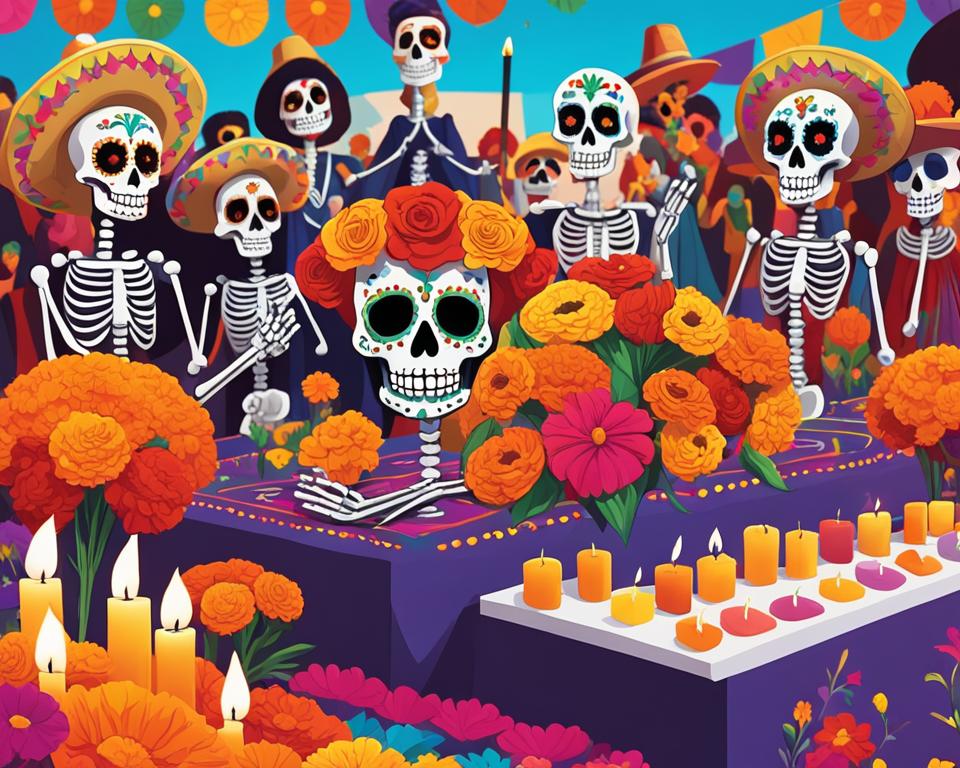
Key Takeaways:
- Day of the Dead is a two-day celebration starting on November 1st, rooted in indigenous traditions and influenced by Catholicism.
- The centerpiece of the celebrations is the ofrenda, an altar that honors the deceased.
- Papel picado, colorful tissue paper with cutouts, and sugar skulls are common decorations.
- Marigolds are displayed to guide spirits and pan de muertos is a traditional bread served during the celebration.
- Day of the Dead is recognized by UNESCO as Intangible Cultural Heritage of Humanity.
Origins of Day of the Dead
The Day of the Dead is deeply rooted in the ancient cultures of Mesoamerica, such as the Aztec, Toltec, and Nahua civilizations. These indigenous societies had a unique belief in the cyclical nature of life and embraced death as a natural part of the human experience.
When Spanish colonizers arrived in the 16th century, they encountered these indigenous traditions and coalesced them with Catholic holidays, resulting in the vibrant celebration we know today as Day of the Dead.
This commemoration takes place over two days, with November 1st dedicated to remembering deceased children and November 2nd to honoring deceased adults. Día de los Muertos is a joyous occasion to pay homage to departed loved ones and celebrate their lives.
“Day of the Dead is a celebration that bridges the gap between our world and the spiritual realm. It is a time to honor our ancestors and keep their memory alive.”
The Journey of Day of the Dead
Throughout the centuries, Day of the Dead has evolved, intertwining indigenous customs with Catholicism. The resulting celebration is a unique blend of ancient traditions and religious influences.
During Day of the Dead, families create ofrendas, or altars, adorned with photographs of the deceased, colorful flowers, and their favorite foods and beverages. These ofrendas act as a welcoming space for the spirits of the departed, who are believed to return to the realm of the living during this time.
| Symbolism in Day of the Dead | Meaning |
|---|---|
| Marigolds | Symbolize the fragility of life and guide spirits back to their resting place |
| Papel Picado | Colorful tissue paper with cutouts; represents the delicate nature of life |
| Sugar Skulls | Decorative candies offered as treats to the departed; represent the sweetness of life |
| La Catrina | A female skeleton figure; symbolizes the equality of death and serves as an inspiration for costumes and makeup |
These rich symbols and traditions come together to create a vibrant and meaningful celebration that honors the cycle of life and death.
Day of the Dead is not only celebrated in Mexico but is also embraced by Latino communities around the world, including in the United States. This cultural phenomenon has gained global recognition, making it a significant and cherished event beyond its indigenous roots.
Symbolism in Day of the Dead
The Day of the Dead celebration is rich with symbolism, reflecting the deep traditions and significance of this cultural holiday. From the ofrenda to the marigolds and papel picado, each element holds special meaning in honoring and remembering the deceased.
The ofrenda, or altar, takes center stage in Day of the Dead celebrations. It is a symbolic space filled with offerings to welcome spirits back to the realm of the living. Water, food, family photos, and candles adorn the altar, creating a gathering place for loved ones both past and present.
“The ofrenda is a way to keep the memory of our ancestors alive, to show them that we still think of them and honor their lives,” says Maria Lopez, a participant in Day of the Dead celebrations.
Marigolds, known as the flowers of the dead, hold great significance in Day of the Dead traditions. These vibrant orange flowers are used to decorate the ofrenda and guide wandering souls back to their resting place. The strong scent of marigolds is believed to attract the spirits, bridging the gap between the living and the dead.
Papel picado, intricately cut colorful tissue paper, is another powerful symbol in Day of the Dead celebrations. It represents the fragility and fleetingness of life. Hung around the altars and throughout the streets, these delicate decorations add a touch of beauty to the festivities.
Sugar skulls, or calaveras de azucar, are both decorative and edible offerings to the dead. These intricately designed candies are placed on the ofrenda and served during the celebration. They symbolize the sweetness of life and the connection between the living and the deceased.
Another prominent symbol in Day of the Dead is La Catrina, the elegant female skeleton figure. Created by Mexican artist José Guadalupe Posada, La Catrina represents the equality of death and serves as inspiration for costumes and makeup during the holiday. Her image reminds us that death is a universal experience that unites us all.
Significance of Symbolism
The symbolism in Day of the Dead goes beyond mere decoration. It carries deep cultural meaning and serves as a way to honor and remember loved ones. The ofrenda welcomes spirits, offering them nourishment and a place of remembrance. Marigolds guide the souls back to their final resting place, while papel picado represents the delicate nature of life. Sugar skulls remind us to cherish the sweetness of life, and La Catrina reminds us of the equality of death.
Together, these symbols create a vibrant and meaningful celebration filled with love, remembrance, and appreciation for the cycles of life and death.
Traditional Foods and Drinks
The Day of the Dead is not only a cultural celebration but also a Mexican holiday known for its vibrant traditions and delicious culinary delights. One of the most iconic and beloved foods associated with this festive occasion is pan de muertos, a sweet bread decorated with bone-shaped decorations that symbolize the cycle of life and death. This scrumptious treat is enjoyed by families as they gather to commemorate their departed loved ones.
In addition to pan de muertos, there is a wide array of other mouthwatering dishes that are typically served during the Day of the Dead celebrations. Some popular Mexican delicacies include:
- Tortilla soup
- Chalupas
- Tamales
- Caramel flan
These flavorful dishes not only satisfy the taste buds but also pay homage to the culinary heritage of Mexico. They are prepared with love and care, often using traditional recipes that have been passed down through generations.
No celebration is complete without a refreshing beverage to complement the gastronomic delights. During the Day of the Dead festivities, traditional Mexican drinks such as:
- Pulque
- Atole
- Hot chocolate
are enjoyed by both young and old, adding to the joyful atmosphere of the cultural celebration.
Together, these traditional foods and drinks create a sensory experience that honors Mexican heritage and brings families and communities together to celebrate the richness of life and pay tribute to the spirits of the departed.
Decorations and Costumes
Day of the Dead is known for its vibrant and visually striking decorations. Sugar skulls and papel picado are common elements used to create a festive atmosphere.
Sugar Skulls: Honoring the Deceased
Sugar skulls, or “calaveras de azúcar” in Spanish, are intricately decorated candy skulls made from sugar paste. These colorful creations are an important part of Day of the Dead celebrations.
Sugar skulls are placed on the ofrenda, the altar dedicated to the deceased. They serve as offerings to honor and remember loved ones who have passed away. Each sugar skull is personalized with the name of the deceased and often decorated with vibrant icing and colorful foil.
Papel Picado: Symbolizing the Fragility of Life
Papel picado, which translates to “perforated paper” in English, is a traditional Mexican craft that involves intricately cutting tissue paper into decorative patterns. This delicate and elegant artwork is a symbol of the fragility of life.
Papel picado is commonly draped around altars and in the streets during Day of the Dead celebrations. The vibrant colors and intricate designs add a festive touch to the festivities, creating a joyful and uplifting atmosphere.
Costumes and Makeup: Embracing La Catrina
“La muerte es democrática, ya que a fin de cuentas, güera, morena, rica o pobre, toda la gente acaba siendo calavera” – José Guadalupe Posada
The iconic figure of La Catrina, a female skeleton dressed in elegant clothing and an extravagant hat, is synonymous with Day of the Dead. Inspired by the illustrations of José Guadalupe Posada, La Catrina represents the equality of death and serves as a reminder to cherish life.
During the holiday, people often dress up as La Catrina, donning elaborate costumes and intricate makeup. The vibrant colors and ornate designs bring a sense of joy and celebration to the día de los muertos festivities.
The Role of Decorations and Costumes in Honoring the Dead
The use of sugar skulls, papel picado, and costumes during Day of the Dead serves to honor and remember the deceased. These decorations symbolize the belief that death is an integral part of life and that the souls of the departed return to join their loved ones during the celebration.
The vibrant colors, intricate designs, and personalization of the decorations and costumes create a visually stunning and deeply meaningful experience that captures the essence of Day of the Dead.
| Decoration | Symbolism |
|---|---|
| Sugar Skulls | Offerings to honor and remember the deceased |
| Papel Picado | Symbolizes the fragility of life |
| Costumes and Makeup | Embracing the spirit of La Catrina and celebrating life |
Indigenous Roots and UNESCO Recognition
Day of the Dead, also known as Dia de los muertos, has deep indigenous roots and is an integral part of Mexican and Central American culture. The holiday originated from ancient Mesoamerican civilizations such as the Aztecs, Toltecs, and Nahua cultures. These indigenous groups believed in the cyclical nature of life and saw death as a natural phase.
In recognition of its cultural significance, Día de los Muertos was designated as Intangible Cultural Heritage of Humanity by UNESCO in 2008. This prestigious recognition highlights the importance of the holiday in preserving and celebrating indigenous traditions. It signifies the value of Día de los Muertos as a unique cultural heritage that should be safeguarded for future generations.
“Día de los Muertos is a testament to the resilience and creativity of indigenous cultures in Mexico and Central America. It celebrates the interconnectedness of life, death, and the spiritual journey.”
This UNESCO recognition has not only brought international attention to the holiday but also led to a deeper appreciation of its cultural and historical significance. Día de los Muertos has become a symbol of identity and heritage, encouraging communities to embrace and honor their indigenous roots.
Through vibrant processions, colorful ofrendas, and elaborate costumes, this cultural celebration serves as a powerful reminder of the rich traditions that have shaped Mexican and Central American society throughout history.
Let’s delve deeper into the various regional celebrations and customs associated with Día de los Muertos in the next section.
| Indigenous Roots and UNESCO Recognition | |
|---|---|
| Dia de los muertos Origins | Indigenous civilizations’ beliefs |
| UNESCO Recognition | Designation as Intangible Cultural Heritage of Humanity |
| Importance of Preservation | Safeguarding indigenous life and traditions |
Celebration Beyond Mexico
While Día de los Muertos is deeply rooted in Mexican culture, its celebration extends beyond the borders of Mexico. Latino communities abroad, particularly in the United States, also partake in the festivities, keeping the tradition alive.
One notable organization that organizes large Day of the Dead celebrations in the United States is Mano a Mano: Mexican Culture Without Borders. They create vibrant events that showcase the rich cultural heritage and customs associated with this Mexican holiday.
The increased popularity of Día de los Muertos globally can be attributed to various factors. The recognition of the holiday as Intangible Cultural Heritage of Humanity by UNESCO in 2008 has played a significant role in promoting awareness and appreciation for the celebration. The sharing of information through various channels, including social media, has also contributed to its global recognition and participation.
Overall, Day of the Dead has transcended borders, demonstrating its universal appeal and significance. The holiday serves as a cultural bridge, connecting people from diverse backgrounds and fostering a sense of unity through the celebration of life and remembrance.
Day of the Dead Celebrations Abroad:
Here is a list of some notable Day of the Dead celebrations held outside of Mexico:
| Location | Event |
|---|---|
| Los Angeles, California | Annual Hollywood Forever Cemetery Day of the Dead celebration |
| Chicago, Illinois | National Museum of Mexican Art’s Day of the Dead exhibition and parade |
| Oaxaca, Mexico | Day of the Dead Guelaguetza festival |
| San Francisco, California | Day of the Dead Festival of Altars in the Mission District |
| Houston, Texas | Lawndale Art Center’s annual Día de los Muertos gala and exhibition |
These celebrations highlight the cultural diversity and widespread appreciation for this cherished Mexican holiday. Whether in Mexico or abroad, the spirit of Day of the Dead continues to thrive, bringing communities together to remember and honor their loved ones.
Regional Celebrations and Traditions
The Day of the Dead celebrations vary across different regions, with each area showcasing unique customs and traditions rooted in pre-Hispanic cultures.
Pátzcuaro, Michoacán
In the beautiful town of Pátzcuaro, located in Michoacán, Mexico, the Day of the Dead celebrations are particularly moving. This region is known for its deep connection to indigenous traditions and its annual all-night vigil held in one of the local indigenous cemeteries.
Mixquic, Mexico City
Just outside the bustling metropolis of Mexico City lies the suburb of Mixquic. Here, the Day of the Dead is commemorated with a touching procession to the local cemetery, where families clean and decorate the graves of their loved ones. The atmosphere is filled with reverence and love for the departed.
Tuxtepec, Oaxaca
Tuxtepec, located in the state of Oaxaca, is celebrated for its intricate sawdust rugs. These impressive designs are meticulously created for important processions during Día de los Muertos. The vibrant colors and detailed patterns add a captivating element to the celebrations in this region.
Aguascalientes
Aguascalientes, the birthplace of the renowned Mexican artist José Guadalupe Posada, hosts a week-long Festival de Calaveras (Festival of Skulls). The highlight of this grand event is an extravagant parade that showcases elaborate floats, costumes, and performances. The festival is a vibrant display of Mexican culture and artistry.
| Region | Celebration |
|---|---|
| Pátzcuaro, Michoacán | All-night vigil in an indigenous cemetery |
| Mixquic, Mexico City | Procession to clean and decorate graves |
| Tuxtepec, Oaxaca | Elaborate sawdust rugs for processions |
| Aguascalientes | Week-long Festival de Calaveras |
Source: Second source
Conclusion
The Day of the Dead is a vibrant Mexican holiday that celebrates life and remembrance. With its indigenous roots and incorporation of pre-Hispanic traditions and Catholic influences, it is a unique and culturally rich celebration.
During this festive occasion, families create ofrendas, or altars, to honor their departed loved ones. These ofrendas are adorned with symbolic decorations such as papel picado and sugar skulls, while marigolds guide spirits back to the realm of the living. Traditional foods and drinks, like the iconic pan de muertos, are shared with family and friends.
Receiving recognition from UNESCO as Intangible Cultural Heritage of Humanity has helped spread awareness of the Day of the Dead globally. It has gained popularity not only in Mexico but also among Latino communities abroad, such as in the United States. Regional celebrations and traditions further add diversity to the holiday, with unique customs observed in different parts of Mexico.
The Day of the Dead is a powerful testament to the Mexican cultural heritage, celebrating the cycle of life and commemorating the departed with joy and reverence. Through its vibrant traditions and colorful festivities, it is a truly remarkable and inclusive celebration of life and remembrance.
FAQ
What is Day of the Dead?
Day of the Dead, or Día de Muertos, is a two-day celebration that takes place on November 1st and 2nd. It is a vibrant Mexican holiday that celebrates life and remembrance.
What are some facts about Day of the Dead?
Day of the Dead has indigenous roots and originated from Aztec practices. It is marked by costumes, food, parades, and decorative tributes. The centerpiece of the celebration is the ofrenda, an altar that honors the deceased. Sugar skulls and papel picado are common decorations used during the holiday.
How did Day of the Dead originate?
Day of the Dead originated from Aztec, Toltec, and other Nahua cultures in ancient Mesoamerica. These cultures believed in the cyclical nature of life and saw death as a natural phase. The arrival of Spanish colonizers in the 16th century led to the integration of indigenous traditions with Catholic holidays.
What is the significance of Day of the Dead?
Day of the Dead is a joyful celebration of life and a way to remember and celebrate the lives of departed loved ones. It is a time to honor and connect with ancestors and to reflect on the cycle of life and death.
What are some traditional foods and drinks associated with Day of the Dead?
Traditional foods for Day of the Dead include pan de muertos, a sweet bread decorated with bone-shaped decorations. Other popular Mexican dishes served during the celebration include tortilla soup, chalupas, tamales, and caramel flan. Drinks like pulque, atole, and hot chocolate are also part of the festivities.
What are the decorations and costumes used during Day of the Dead?
Sugar skulls and papel picado are common decorations used during Day of the Dead. Sugar skulls are placed on the ofrenda as offerings to the dead. Papel picado, colorful tissue paper with cutouts, symbolizes the fragility of life and is draped around altars and in the streets. Costumes and makeup inspired by La Catrina, the female skeleton figure, are worn to celebrate the holiday.
How is Day of the Dead connected to indigenous roots and UNESCO recognition?
Day of the Dead has indigenous roots and is deeply connected to the culture of Mexico and Central America. In 2008, UNESCO recognized Día de los Muertos as Intangible Cultural Heritage of Humanity, highlighting its importance in preserving and celebrating indigenous life and traditions.
Is Day of the Dead only celebrated in Mexico?
No, Day of the Dead is also celebrated in Latino communities abroad, including in the United States. Communities like Mano a Mano: Mexican Culture Without Borders organize large Day of the Dead celebrations. The holiday has gained popularity globally, thanks to recognition by UNESCO and the sharing of information.
How do regional celebrations and traditions add to the diversity of Day of the Dead?
Day of the Dead celebrations differ by region, depending on the predominant pre-Hispanic culture. Pátzcuaro in Michoacán, Mexico, is known for its moving celebrations, including an all-night vigil in an indigenous cemetery. Mixquic, a suburb of Mexico City, has a procession to the local cemetery to clean and decorate graves. Other regions like Tuxtepec in Oaxaca and Aguascalientes have their own unique customs and traditions.
What are some key takeaways about Day of the Dead?
Day of the Dead is a vibrant Mexican holiday that celebrates life and remembrance. It has indigenous roots and incorporates both pre-Hispanic traditions and Catholic influences. The celebration includes the creation of ofrendas, the use of symbolism in decorations and costumes, and the sharing of traditional foods and drinks. Day of the Dead is recognized by UNESCO and has gained popularity globally, including among Latino communities abroad. Regional celebrations and traditions add further diversity to the holiday.