Meerkats are fascinating creatures that have captured the hearts of many with their unique characteristics. These highly evolved animals possess amazing adaptations that make them truly extraordinary. From their immunity to venom to their complex social behavior, meerkats are a species like no other.
When it comes to handling venom, meerkats have developed incredible strategies. They are immune to certain types of venom, including that of snakes. Additionally, they have mastered the art of dealing with the venom found in scorpions, a skill that ensures their survival in their challenging habitat.
Intelligence shines through in meerkats, a trait that is evident in their highly coordinated behavior. These intelligent animals exhibit complex social interactions and work together as a cohesive unit. Their ability to problem solve and communicate effectively is truly impressive.
Meerkats are omnivores, meaning they have a varied diet that includes insects, small rodents, and even poisonous scorpions and snakes. It’s a testament to their resourcefulness and adaptability in their harsh desert environment. Surprisingly, despite living in a dry desert, meerkats do not drink water and obtain all the moisture they need from their food.
These are just a few fascinating facts about meerkats that make them such captivating creatures. There is still so much more to discover about their behavior, adaptations, and survival strategies. Let’s embark on a journey to explore the fascinating world of meerkats!
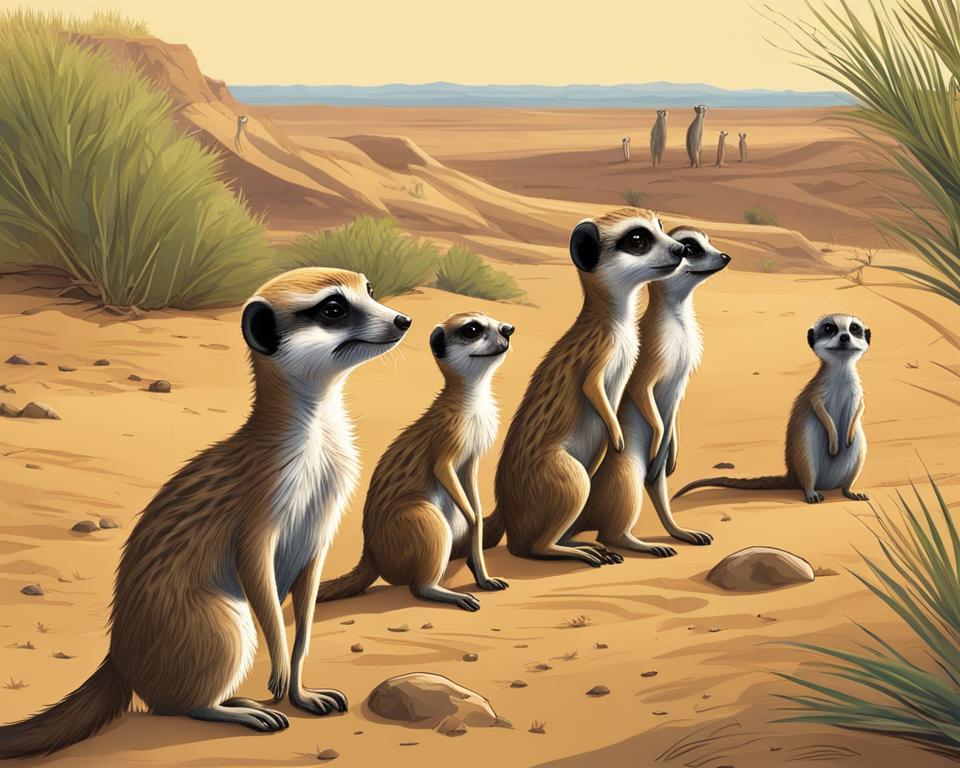
Key Takeaways:
- Meerkats have amazing adaptations, such as immunity to certain types of venom.
- They exhibit complex coordinated behavior and demonstrate **** levels of intelligence.
- Meerkats are omnivores with a varied diet, including insects and even poisonous prey.
- They obtain all the moisture they need from their food and do not drink water.
- Meerkats are fascinating creatures with unique characteristics that make them stand out in the animal kingdom.
Meerkat Behavior
Meerkats are fascinating creatures that exhibit a wide range of behaviors, showcasing their intelligence and adaptability. Their behavior is a result of a combination of social and asocial behaviors, making them highly coordinated and successful in their tasks. Let’s explore some of the remarkable behaviors displayed by these captivating animals.
Coordinated Behavior and Problem-Solving
One of the most intriguing aspects of meerkat behavior is their ability to solve tasks using a combination of social interactions and individual skills. They work together in groups, called mobs or gangs, to accomplish complex objectives. Meerkats demonstrate resourcefulness, creativity, and problem-solving abilities, which are essential for their survival in the harsh desert environments they inhabit.
“Meerkats display remarkable intelligence, using a combination of social and individual skills to solve tasks.”
For example, when foraging for food, meerkats collaborate and communicate effectively to locate prey, detect potential threats, and ensure the safety of the group. This coordinated behavior showcases their intelligence and the importance of their social structure in their daily lives.
Exceptional Eyesight
Meerkats possess exceptional eyesight, allowing them to spot predators or potential food sources from a considerable distance. Their keen eyesight enables them to spot birds from miles away on the horizon, providing an early warning system for impending danger.
In addition to their visual acuity, meerkats have adaptations such as dark patches around their eyes. These patches help reduce sun glare while digging their intricate burrows, protecting their sensitive eyes from harmful sunlight.
Meerkat Behavior Overview
| Behavior | Description |
|---|---|
| Social Interactions | Meerkats exhibit highly coordinated behavior within their mobs, performing tasks collectively and communicating effectively. |
| Problem-Solving | They showcase intelligence and adaptability in solving complex tasks, relying on both social interactions and individual skills. |
| Keen Eyesight | Meerkats possess exceptional vision, enabling them to spot predators and potential food sources from long distances. |
| Dark Eye Patches | Adaptations around their eyes protect meerkats from sun glare while diggin |
Meerkat behavior is both fascinating and intricate, revealing their intelligence, teamwork, and adaptability. Their social structure, problem-solving skills, and remarkable eyesight contribute to their survival in challenging environments. In the next section, we will delve into the diverse diet of meerkats and how they adapt to different food sources.
Meerkat Diet
Meerkats are fascinating creatures with a versatile and varied diet. As omnivores, they consume both plants and animals to sustain themselves in their harsh desert environment. Their diet primarily consists of insects, which they locate using their enhanced sense of smell. These small and agile mammals have the remarkable ability to track down insects even when they are hidden below the surface.
In addition to insects, meerkats also feed on small rodents, fruits, birds, eggs, and lizards. They have been observed capturing and consuming venomous scorpions and snakes, showcasing their adaptability and hunting skills. For a meerkat, foraging for food is a constant activity. Due to their small size and **** energy expenditure, they carry no excess body fat stores; hence, they must continually search for sustenance.
“Meerkats showcase their adaptability and hunting skills by capturing and consuming venomous scorpions and snakes.”
For meerkats, food not only provides nourishment but also serves as a vital source of hydration. Living in the desert, where water is scarce, meerkats have evolved to obtain all the moisture they need from their food. This remarkable adaptation allows them to survive without needing to drink water directly.
| Meerkat Diet | Description |
|---|---|
| Insects | Meerkats primarily rely on insects as their main food source. They use their acute sense of smell to locate and capture various types of insects. |
| Small rodents | Meerkats are opportunistic hunters and will prey on small rodents when available. These include mice, rats, and other similar small mammals. |
| Fruit | Meerkats also enjoy consuming fruits such as berries and melons when they are in season. Fruits provide essential nutrients and hydration. |
| Birds and eggs | Meerkats have been observed hunting and feasting on smaller bird species and their eggs. This adds a significant protein source to their diet. |
| Lizards | Lizards are not only a source of food but also provide necessary hydration to meerkats living in arid environments. |
| Venomous scorpions and snakes | Meerkats display impressive resilience by hunting and consuming venomous scorpions and snakes. They have adapted to handle the toxins found in these creatures. |
The meerkat’s diet showcases their resourcefulness and adaptability in a challenging environment. By foraging for a diverse range of food sources, meerkats ensure their survival and the well-being of their mob in the harsh desert landscape.
Meerkat Adaptations
Meerkats have unique adaptations that contribute to their impressive survival abilities. One notable adaptation is their immunity to certain types of venom, enabling them to handle bites from venomous snakes. Additionally, meerkats have developed a fascinating technique for handling the venom found in scorpions, showcasing their remarkable ability to resist toxins. When encountering a scorpion, meerkats bite off the stinger and then rub the insect in sand to remove any remaining venom. This adaptation allows meerkats to safely consume poisonous prey without being harmed.
This image visually represents the meerkat’s adaptations, emphasizing their ability to handle venomous creatures and protect themselves.
Meerkat Adaptations to Venom Resistance
| Adaptation | Description |
|---|---|
| Venom Immunity | Meerkats possess natural immunity to certain venom, allowing them to withstand bites from venomous snakes. |
| Technique for Handling Scorpion Venom | When encountering scorpions, meerkats bite off the stinger and rub the insect in sand to remove any remaining venom, enabling them to safely consume scorpions. |
These adaptations play a vital role in the survival and dietary habits of meerkats, allowing them to thrive in their natural habitat despite the presence of venomous predators. The ability to resist venom expands their food options, enabling them to consume prey that would otherwise be deadly for most animals.
Meerkat Habitat
Meerkats are fascinating creatures that have adapted to the challenging desert environments they call home. They can be found in various deserts, including the Kalahari Desert in Botswana, the Namib Desert in Namibia and Angola, and parts of South Africa. These arid habitats provide the perfect conditions for meerkats to thrive.
In their desert-dwelling lifestyle, meerkats rely on their ability to dig burrows for shelter from predators and the harsh desert heat. These burrows not only provide protection but also serve as a safe space for sleeping, grooming, and raising their young. Meerkats are excellent diggers, and their preference for loose sandy soil in open grasslands allows them to create networks of underground tunnels and chambers within their habitat.
Meerkats have also adapted to the limited resources and extreme temperatures of the desert. They have developed the ability to obtain all the moisture they need from their food, eliminating the need to drink water. This adaptation allows them to survive in an environment where water sources may be scarce or inaccessible.
By understanding the meerkat habitat and the adaptations that allow these desert-dwelling mammals to thrive, we can gain a greater appreciation for their resilience and the remarkable ways in which they have conquered their challenging environment.
| Desert | Location |
|---|---|
| Kalahari Desert | Botswana |
| Namib Desert | Namibia and Angola |
| Parts of South Africa | South Africa |
Meerkat Social Structure
Meerkats are highly social animals that live in groups called mobs or gangs. These groups can range in size from as little as three to as large as 50 individuals. The mob is composed of several family groups, with a dominant pair in each family. Females are typically the dominant members of the mob. All members of the mob work together to gather food, watch for predators, and care for the young.
Within a meerkat mob, each family group has their own specific roles and responsibilities. The dominant pair, usually a male and a female, are the breeding pair and have the highest social status. They are responsible for leading the group and making important decisions.
The rest of the mob consists of siblings, offspring, and related individuals. These meerkats work together in various tasks, such as foraging for food, defending territory, and digging burrows. They also take turns acting as sentinels, keeping watch for potential threats while the rest of the group engages in other activities.
The social structure of meerkats is highly organized and cooperative, with all members contributing to the survival and well-being of the mob. Their social bonds are strong, and they rely on each other for protection, support, and raising their young.
“Meerkats have developed a complex social structure that allows them to thrive in their challenging desert habitat. By working together and coordinating their efforts, they increase their chances of survival and ensure the success of the mob.”
Roles within a Meerkat Mob
Within a meerkat mob, different individuals take on specific roles and responsibilities to ensure the group’s functioning and well-being. Here are some key roles within a meerkat mob:
- The dominant pair: Consisting of an alpha male and an alpha female, the dominant pair leads the mob and makes important decisions. They are responsible for maintaining order, protecting the group, and guiding the mob’s activities.
- Sentinels: Meerkats take turns acting as sentinels, keeping watch for potential predators. They climb up on rocks or termite mounds and scan the surroundings for any signs of danger. When a sentinel spots a threat, they emit a ****-pitched alarm call to alert the rest of the mob to take cover.
- Foragers: These meerkats are responsible for finding and gathering food for the mob. They use their keen sense of smell to locate insects, small rodents, fruits, and other food sources in their environment.
- Helpers: Younger members of the mob, often siblings or offspring of the dominant pair, act as helpers. They assist in various tasks, such as babysitting, grooming, and teaching younger meerkats essential skills.
- Breeders: The dominant pair are the primary breeders within the mob. They ensure the continuation of the group by producing offspring and taking care of their young.
Through their well-structured social system, meerkats are able to utilize the strengths and abilities of each individual to thrive in their challenging desert habitat.
Meerkat Predators
Meerkats face numerous threats from predators in their environment. They have evolved various defensive behaviors to protect themselves from these dangers. Let’s explore the primary predators and the strategies meerkats employ to ward them off.
Birds of Prey
Birds of prey, such as eagles and hawks, pose significant threats to meerkats. With their keen eyesight and sharp talons, these aerial predators can swoop down and snatch unsuspecting meerkats. Their attacks can be swift and deadly, making birds of prey one of the fiercest predators meerkats encounter in the wild.
Snakes
Snakes are another formidable predator for meerkats. Slithering silently through the meerkat’s habitat, snakes can quickly strike and inject venom into their prey. Meerkats must be vigilant and alert to detect the presence of snakes and evade their potentially deadly bites.
Other Meerkat Mobs
While meerkats typically live in mobs or gangs, conflicts can arise between different groups. When boundaries are crossed, meerkat mobs may engage in territorial disputes, resulting in aggressive encounters. These conflicts can lead to injuries or even death, as meerkats fiercely defend their territories and resources.
Environmental Challenges
Meerkats face not only the threat of predators but also environmental challenges that can impact their survival. Droughts, for example, can cause food scarcity and dehydration, weakening meerkats and making them more vulnerable to other predators. Additionally, burrow-flooding rainstorms can wash away their underground shelters, leaving them exposed and susceptible to attacks.
To protect themselves from these threats, meerkats have developed several defensive behaviors. When confronted with danger, they stand together, arching their backs and hissing, displaying a unified front to intimidate predators. This coordinated response serves to deter and fend off potential attackers.
“Meerkats demonstrate remarkable resilience and adaptability in the face of predation and environmental challenges.”
Through careful observation and cooperation within their mobs, meerkats increase their chances of survival in their harsh desert habitat.
Threats to Meerkats
| Threat | Description |
|---|---|
| Birds of Prey | Eagles and hawks swoop down to snatch meerkats. |
| Snakes | Slithering predators that can inject venom into meerkats. |
| Other Meerkat Mobs | Territorial disputes and aggressive encounters between different meerkat groups. |
| Environmental Challenges | Droughts, burrow-flooding rainstorms, and other natural phenomena that impact survival. |
Despite these challenges, meerkats’ collective defense mechanisms and vigilance allow them to navigate their perilous existence and thrive in their unique desert habitat.
Meerkat Lifespan
Meerkats, fascinating creatures that they are, have an average lifespan of 8 years in the wild. However, their time in the wild is fraught with numerous predators and harsh environmental conditions. In contrast, meerkats living in captivity, shielded from these threats, enjoy a longer lifespan of 12 to 14 years and have even been known to reach an impressive 20 years.
The lifespan of meerkats varies depending on several factors, including the availability of food, the prevailing environmental conditions, and the risk of predation. While meerkats in the wild face constant challenges to their survival, those in captivity are afforded better protection and care, leading to extended lifespans.
Understanding the factors that influence meerkat lifespan is crucial to appreciating their resilience and the impact of their environment on their longevity. Let’s explore these factors in more detail.
Factors Affecting Meerkat Lifespan
Several factors contribute to the varied lifespan of meerkats:
- Availability of Food: Adequate nutrition plays a vital role in determining meerkat lifespan. A consistent and diverse food supply ensures their overall health and well-being, helping them survive and thrive.
- Environmental Conditions: The harsh desert environment poses significant challenges to meerkats, including extreme temperatures and scarce water sources. Adverse environmental conditions can reduce their lifespan.
- Predation: Meerkats face constant threats from predators such as birds of prey, snakes, and rival meerkat mobs. The risk of predation can significantly impact their survival and lifespan.
By carefully considering these factors and implementing measures to mitigate the risks, we can contribute to the conservation and well-being of these remarkable creatures.
Comparing Meerkat Lifespans
Let’s compare the average lifespans of meerkats in the wild and those in captivity:
| Environment | Average Lifespan |
|---|---|
| Wild | 8 years |
| Captivity | 12-14 years |
As the table demonstrates, meerkats living in captivity enjoy an extended lifespan of 12 to 14 years, exceeding their wild counterparts’ lifespan by a significant margin.
“The captive environment provides meerkats with the necessary protection and care, allowing them to live longer lives, free from the constant threats that plague their counterparts in the wild.”
Understanding the impact of different environments on meerkat longevity is vital for conservation efforts and the overall well-being of these incredible creatures. By considering their needs and creating suitable habitats, we can offer a nurturing environment that fosters healthier and more extended lives for meerkats.
Meerkat Communication
Meerkats have a fascinating and intricate system of communication that combines various vocalizations and body language. They utilize their communication skills to convey important messages within the meerkat mob. Through their vocalizations and visual cues, meerkats are able to coordinate group activities, warn others of potential dangers, and maintain social cohesion.
Vocalizations
Meerkats possess a wide range of vocalizations, which they use to express different emotions and convey specific messages. They are known to produce at least 10 distinct sounds, each serving a unique purpose in their communication system. Some of these vocalizations include:
- Murmurs: Soft vocalizations that are often used during grooming sessions or to express contentment and comfort.
- Threatening growls and spits: Aggressive vocalizations that meerkats use to warn or intimidate potential threats or intruders.
- Scolding clucks: Short, sharp clucking sounds that are made to discipline younger members of the mob or express disapproval.
- Defensive alarm barks: Loud, piercing barks that serve as an alarm call, signaling danger and prompting others to take cover.
Interestingly, female meerkats tend to be more vocal than males, and their vocalizations play a crucial role in maintaining social order and coordination within the mob.
Visual Cues
In addition to vocalizations, meerkats also use visual cues to communicate with one another. They rely on body language and specific postures to convey messages effectively. Some of the visual cues observed in meerkat communication include:
- Raised hair: Meerkats can raise the hair on their backs and tails, which indicates heightened awareness or excitement. This visual cue serves as a signal to other members of the mob that they should be vigilant.
- Arched backs: When meerkats encounter potential threats, they may arch their backs to appear larger and more intimidating. This behavior is a defensive mechanism aimed at warding off predators.
By using a combination of vocalizations and visual cues, meerkats effectively communicate with one another, ensuring the survival and well-being of the entire mob.
Meerkat Adaptations to Desert Life
Meerkats have developed remarkable adaptations that enable them to thrive in the harsh desert environments they call home. These adaptations allow them to overcome specific challenges and make the most of their surroundings.
Dark Eye Patches and Long Pupils: Meerkats possess distinct dark patches around their eyes that help reduce sun glare, allowing them to see clearly even in the bright desert sun. Additionally, their long, horizontal pupils provide them with a wider field of vision, eliminating the need to constantly turn their heads and enabling them to spot potential threats or opportunities from various angles.
Protective Eye Membrane: When meerkats dig, they have a unique adaptation in the form of a membrane that covers their eyes, safeguarding them from loose debris or sand particles. This protective eye membrane ensures that they can navigate underground tunnels and forage for food without any hindrance or discomfort.
Waterless Survival: Living in desert regions where water is scarce, meerkats have adapted to obtain all the moisture they need from the food they consume. Their diet includes a variety of insects, which not only provide essential nutrients but also contain enough moisture to sustain them. This remarkable adaptation allows meerkats to survive without the need to drink water, eliminating the challenge of finding a scarce resource in their arid environment.
By evolving these adaptations, meerkats have successfully carved out a niche in the desert ecosystem, showcasing their resilience and ability to thrive in seemingly inhospitable conditions.
Meerkat Survival Strategies
Meerkats are highly skilled in implementing survival strategies to protect themselves and their young. These defense mechanisms and coordinated behaviors are essential for their survival in the harsh desert environment.
One of the key strategies employed by meerkats is the use of sentries. These individuals take positions on **** points, carefully scanning their surroundings for any potential predators. Once a sentry spots danger, they emit a ****-pitched alarm call to alert the rest of the group. This prompt communication allows the entire mob to take cover and avoid potential threats.
Meerkats also utilize bolt holes strategically placed throughout their foraging areas. These bolt holes serve as emergency hiding spots in case of imminent danger. When faced with a predator or any other threatening situation, meerkats quickly retreat to these hidden sanctuaries, minimizing the risk to their group and ensuring their survival.
“In times of danger, meerkats stand together, arch their backs, and hiss to deter predators.”
Additionally, meerkats exhibit intimidating behaviors when faced with predators. When a threat arises, meerkats stand together, visually aligning themselves to appear larger and more formidable. They arch their backs and emit threatening hissing sounds. These intimidating displays send a clear message to predators, warning them to stay away and avoid confrontation with the meerkat mob.
By combining these survival strategies – the use of sentries, bolt holes, and intimidating behaviors – meerkats enhance their chances of survival and protect their group from potential harm.
Conclusion
Meerkats are fascinating creatures that have captivated the world with their unique adaptations and behaviors. These desert-dwelling mammals have evolved impressive strategies to thrive in harsh environments, such as their immunity to venom and complex social structures.
One of the most remarkable aspects of meerkats is their intelligence and ability to communicate. They work together as a mob, displaying coordinated behaviors and effectively navigating their surroundings. Their resourceful and versatile nature is evident in their diet, which includes insects, small rodents, fruits, and even venomous prey.
Despite the challenges posed by predators and environmental conditions, meerkats have developed various defense mechanisms to ensure their survival. They rely on their keen senses, such as their exceptional eyesight, to detect potential threats. When danger arises, they stand united, arch their backs, and emit warning sounds to deter predators.
Studying and appreciating these incredible animals allows us to gain a deeper understanding of the wonders of the natural world. Meerkats serve as a reminder of the remarkable adaptations and behaviors that have allowed species to survive and thrive in challenging environments. By protecting and preserving their habitats, we ensure that future generations can continue to marvel at the resilience and ingenuity of meerkats and other fascinating creatures.
FAQ
What are some interesting and fun facts about meerkats?
Meerkats have fascinating adaptations, including immunity to certain types of venom. They are highly intelligent animals that exhibit complex coordinated behavior. Despite living in the desert, meerkats do not drink water and get all the moisture they need from their food.
What is the behavior of meerkats like?
Meerkats display complex coordinated behavior and exhibit remarkable intelligence. They use a combination of social and asocial behaviors to solve tasks and have excellent eyesight that allows them to spot birds from miles away.
What do meerkats eat?
Meerkats are omnivores with a varied diet. They primarily eat insects but also consume small rodents, fruit, birds, eggs, lizards, and even venomous scorpions and snakes.
What adaptations do meerkats have?
Meerkats have unique adaptations that aid in their survival. They are immune to certain types of venom, allowing them to handle bites from venomous snakes. They have also developed a technique for handling scorpions by biting off the stinger and rubbing them in sand to remove any remaining venom.
Where do meerkats live?
Meerkats are found in various deserts, such as the Kalahari Desert in Botswana, the Namib Desert in Namibia and Angola, and parts of South Africa. They prefer open grasslands and areas with loose sandy soil for easy digging.
What is the social structure of meerkats?
Meerkats are highly social animals that live in groups called mobs or gangs. These groups can range in size from as little as three to as large as 50 individuals. The mob is composed of several family groups, with a dominant pair in each family. All members of the mob work together to gather food, watch for predators, and care for the young.
What are the predators of meerkats?
Meerkats face threats from predators such as birds of prey, snakes, and other meerkat mobs. ******* and burrow-flooding rainstorms can also pose challenges to their survival.
What is the lifespan of meerkats?
Meerkats have an average lifespan of 8 years in the wild but can live up to 20 years in captivity. Their lifespan varies depending on factors such as food availability, environmental conditions, and predation.
How do meerkats communicate?
Meerkats have a complex system of communication that includes vocalizations and body language. They make various sounds and use visual cues to convey messages to other members of their mob.
How do meerkats adapt to desert life?
Meerkats have several adaptations that allow them to thrive in desert environments. They have dark eye patches to cut down on sun glare, long horizontal pupils for a wide range of vision, and a protective membrane that covers their eyes while digging. They also obtain all the moisture they need from their food.
What survival strategies do meerkats have?
Meerkats use sentries to watch for predators and emit alarm calls to alert the group to take cover. They have bolt holes for emergencies and exhibit intimidating behavior to deter attackers.
What are some key facts about meerkats?
Meerkats are fascinating creatures with unique adaptations and behaviors. They have evolved to thrive in the desert environment and display remarkable intelligence and social structures. Their diet, adaptations, communication, and survival strategies contribute to their resilience in challenging conditions.