Movies about the Troubles, the political conflict in Northern Ireland, have captivated audiences for decades. These films provide a unique perspective on one of the most turbulent periods in Irish history, exploring the gripping narratives of the Troubles and bringing the past to life on the big screen. From intense thrillers to thought-provoking dramas, Troubles cinema offers a diverse range of films that delve into the complexities and consequences of the conflict.
In this article, we will take a closer look at some impactful movies about the Troubles, spanning from the late 1960s to the historic Good Friday Agreement in 1998. These films offer powerful portrayals of the political conflict, shedding light on the personal stories and the wider impact it had on society.
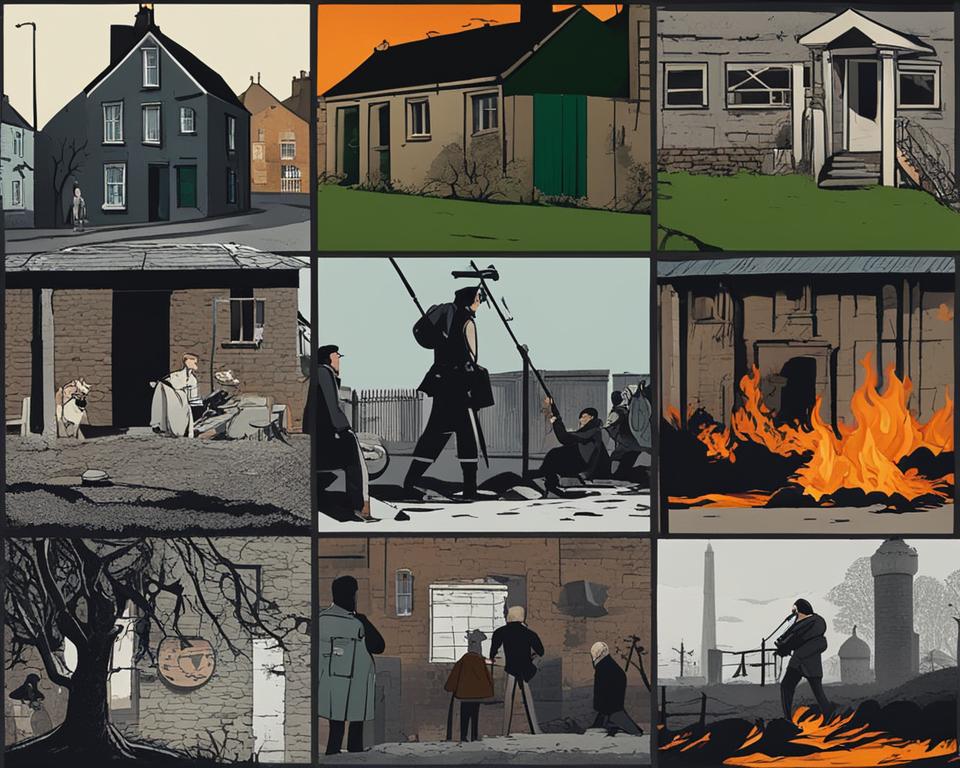
Key Takeaways:
- Movies about the Troubles provide a platform for filmmakers to explore the complexities and consequences of the conflict.
- These films offer a deep understanding of a conflict that shaped a generation in Northern Ireland.
- Troubles cinema includes a range of genres, from documentaries to thrillers, each offering a unique perspective on the history.
- Through their compelling narratives and powerful performances, Troubles movies contribute to the ongoing dialogue surrounding the conflict.
- These films bring history to life and highlight the personal stories of those affected by the Troubles.
’71 (2014)
“’71” is a tense thriller set in Belfast during the Troubles in 1971. The film follows a young British squaddie who gets caught behind enemy lines after being separated from his unit. He must navigate the dangerous streets of bomb-torn Belfast while trying to determine which loyalist allies he can trust. This gripping film provides a harrowing portrayal of the conflict and the challenges faced by those involved.
| Main Details | Additional Details |
|---|---|
| Year Released | 2014 |
| Director | Yann Demange |
| Writer | Gregory Burke |
| Genre | Thriller, Action, Drama |
| Setting | Belfast, Northern Ireland |
| Main Characters | Jack O’Connell as Gary Hook, Sean Harris as Captain Sandy Browning, Richard Dormer as Eamon, Paul Anderson as Sergeant Leslie Lewis, Sam Reid as Lt. Armitage |
In the Name of the Father (1993)
“In the Name of the Father” is a powerful drama that tells the true story of the wrongful conviction of the Guildford Four during the Troubles. The Guildford Four, wrongly accused of an IRA bombing, are imprisoned for a crime they did not commit. The film follows the emotional journey of a man and his father as they fight for justice and freedom. With the help of an English lawyer, their case brings to light the injustices faced by innocent individuals during this turbulent time.
| Key Themes | Main Characters | Release Year |
|---|---|---|
| Wrongful Conviction | Gerry Conlon, Giuseppe Conlon, Gareth Peirce | 1993 |
| Justice | Paul Hill, Paddy Armstrong, Carole Richardson | |
| Political Activism | Inspector Dixon, Joe McAndrew |
“In the Name of the Father” sheds light on the resilience and determination of those fighting against wrongful convictions during the Troubles. It portrays the emotional rollercoaster of the characters as they navigate the complexities of the legal system and the political backdrop of the IRA conflict.
Notable Quotes:
- “I’m an innocent man. I’ve spent 15 years in prison for something I didn’t do.” – Gerry Conlon
- “They have gone through hell. Our aim since our joint campaigns have started… is to get justice for them.” – Gareth Peirce
- “I spent more time defending your rights than my own. That’s what a father does.” – Giuseppe Conlon
The Crying Game (1992)
“The Crying Game” is a critically acclaimed film that explores the complex themes of gender, sexuality, and loyalty against the backdrop of the Troubles.
The story revolves around an IRA soldier who forms an unexpected bond with a British soldier he has kidnapped. As their relationship develops, secrets from their pasts come to light, leading to a shocking twist that challenges their loyalties.
This thought-provoking film delves into the complexities of identity and the impact of the Troubles on personal relationships.
Unexpected Romance Amidst the Conflict
In “The Crying Game,” director Neil Jordan explores themes of love and attraction in the most unlikely of circumstances – between an IRA soldier and his British captive.
The film begins with the kidnapping of a British soldier by a group of IRA members, led by the enigmatic Fergus. What initially seems like a straightforward story of political conflict takes a surprising turn as a romance blossoms between Fergus and the soldier’s girlfriend, Dil.
As the relationship between Fergus and Dil develops, the film challenges preconceived notions of loyalty and love, blurring the lines between friend and foe. The narrative forces viewers to question their own assumptions and prejudices, ultimately offering a complex exploration of the human capacity for connection and understanding.
“The Crying Game transcends its political backdrop, becoming a poignant exploration of love, desire, and the masks we wear to protect ourselves. It’s a film that challenges our expectations and forces us to confront our own biases.” – Roger Ebert
A Deep Dive into Identity
One of the central themes of “The Crying Game” is the exploration of identity. The characters in the film grapple with questions of who they truly are and how their pasts shape their present.
Fergus, played by Stephen Rea, undergoes a profound transformation throughout the film. As he navigates conflicting loyalties and unexpected emotions, he is forced to confront his own identity and reconcile his actions with his principles.
The film also explores the impact of societal expectations and cultural conditioning on personal identity. It challenges traditional notions of gender and sexuality, inviting viewers to question the boundaries that society often imposes on individuals.
A Tale of Secrets and Betrayal
“The Crying Game” is known for its shocking twist that subverts audience expectations and challenges conventional narratives. This pivotal moment in the film reveals hidden secrets and manipulations, testing the characters’ loyalties and leaving a lasting impact on their lives.
The twist in the film highlights the complex web of relationships that exist amidst the Troubles, where trust is a scarce commodity and alliances can shift in an instant. It serves as a metaphor for the tangled nature of personal and political relationships during times of conflict.
Impact and Legacy
“The Crying Game” garnered critical acclaim upon its release, earning six Academy Award nominations, including Best Picture. It remains a groundbreaking film that pushed boundaries and challenged conventional storytelling.
With its bold exploration of sensitive themes and its ability to provoke introspection and reflection, “The Crying Game” continues to be regarded as a timeless and thought-provoking film.
Cal (1984)
“Cal” is a compelling film that delves into the haunting story of a young IRA soldier named Cal. Wracked with guilt after participating in a violent act, Cal finds himself trapped in a dangerous cycle of remorse and despair. As he grapples with his inner demons, he becomes entangled in a forbidden affair with the widow of a man he was involved in killing. The film explores the psychological toll of sectarian violence and the profound impact it has on the lives of those caught in its crossfire.
Through its powerful performances and nuanced storytelling, “Cal” offers a gripping portrayal of the Troubles and the complex emotions experienced by individuals embroiled in the conflict. The film highlights the devastating consequences of violence and the profound choices that shape the trajectory of lives.
Directed by Pat O’Connor and featuring standout performances by actors such as John Lynch and Helen Mirren, “Cal” provides a thought-provoking examination of the human cost of war and the enduring power of forbidden love.
Elephant (1989)
“Elephant” is a groundbreaking film that depicts the Troubles through a series of unexplained killings. The film offers no motive or dialogue, simply presenting the stark reality of violence in Northern Ireland. Each killing is shown without emotion or explanation, highlighting the senseless nature of the conflict. Directed by Alan Clarke, “Elephant” remains one of the most evocative portrayals of the Troubles and its human cost.
The Outsider (1980)
“The Outsider” is a captivating film that explores the complexities of the Troubles through the perspective of an Irish-American Vietnam veteran. Inspired by his grandfather’s legacy and seeking to make a difference, he becomes involved with the IRA. However, he soon realizes that the struggle is far more intricate than he initially believed.
The film delves into the blurred lines between loyalty and identity as the protagonist finds himself caught between two warring sides. As the story unfolds, he becomes a target, facing threats from both the IRA and those who oppose them.
“The Outsider” offers a thought-provoking portrayal of the consequences of one’s actions during a conflict. It raises questions about the sacrifices individuals make and the personal toll they endure in the pursuit of their ideals.
Keywords for SEO: The Outsider film, Irish-American, IRA, complexities of the struggle
| Key Details | Information |
|---|---|
| Release Year | 1980 |
| Director | Tony Luraschi |
| Genre | Drama, Thriller |
| Starring | Craig Wasson, Sterling Hayden, Patricia Quinn |
| Running Time | 96 minutes |
Maeve (1981)
“Maeve” is a film that delves into the personal struggles faced by women during the Troubles in Belfast. The story revolves around a young woman named Maeve, who returns to her hometown after years of living in London. Through her journey, the film offers a feminist perspective on the conflict, shedding light on the challenges and erasure of women’s experiences in a patriarchal society deeply affected by the Troubles.
Maeve’s interactions with her family and the wider community highlight the complexities of navigating life amidst political turmoil. The film portrays the struggle for agency and the search for identity, as Maeve confronts the gendered expectations and societal constraints that have been further amplified by the Troubles.
This feminist perspective within “Maeve” adds a unique dimension to the representation of the Troubles in cinema, giving voice to a group often marginalized in narratives dominated by male experiences. By centering the story on Maeve’s journey and highlighting the impact of the conflict on her personal life, the film emphasizes the need for a more inclusive understanding of the Troubles.
The representation of the Troubles from a feminist perspective in “Maeve” challenges the traditional narrative and highlights the experiences of women in a society deeply affected by conflict.
Notable Quote from the Film:
“I’m tired of being silenced. My experiences matter, and I refuse to let the Troubles erase the voices of women like me.” – Maeve
Key Takeaways:
- “Maeve” offers a feminist perspective on the Troubles, portraying the challenges and erasure of women’s experiences.
- The film explores the struggle for agency and identity in a patriarchal society deeply affected by conflict.
- By centering the story around Maeve’s journey, “Maeve” challenges the traditional narratives dominated by male experiences.
- The film emphasizes the need for a more inclusive understanding of the Troubles and highlights the importance of amplifying women’s voices.
| Film Title | Release Year | Director |
|---|---|---|
| Maeve | 1981 | Pat Murphy |
Bloody Sunday (2002)
“Bloody Sunday” is a powerful dramatization of the 1972 civil rights protest march in Derry, which tragically resulted in the killing of 14 unarmed protesters by British troops. The film recreates the events leading up to the massacre and the impact it had on the community. Through its realistic and harrowing portrayal, “Bloody Sunday” sheds light on one of the darkest episodes of the Troubles.
This image portrays a scene from the film “Bloody Sunday,” depicting the tension and violence that unfolded during the civil rights protest march in Derry. The film captures the anguish and turmoil experienced by the protesters and the lasting trauma inflicted upon the community.
In This Corner (1986)
In This Corner is a gripping film set during the Troubles in Northern Ireland. It revolves around a young member of the IRA who becomes entangled in a complex web of loyalty, betrayal, and personal sacrifice. After being caught in an assassination attempt, he is coerced into becoming an informer for the British authorities.
The film delves deep into the moral dilemmas faced by individuals embroiled in both sides of the conflict, highlighting the difficult choices they must make to protect themselves and their loved ones. As the protagonist grapples with his role as an informer, tensions rise, and the consequences of his actions become increasingly dire.
In This Corner offers a nuanced exploration of the intricacies of the Troubles, exposing the harsh reality faced by those caught in the crossfire. It examines the complexities of loyalty and the heavy toll that individual decisions can have on personal relationships and the overall conflict.
Hunger (2008)
“Hunger” is a powerful biographical drama that chronicles the 1981 hunger strike led by IRA prisoner Bobby Sands. The film delves into the physical and psychological toll of the hunger strike on Sands and his fellow inmates. Through its visceral and uncompromising portrayal of the protest, “Hunger” highlights the resilience and determination of those involved in the fight for their political beliefs.
Bobby Sands and the Hunger Strike
In the early 1980s, tensions were high in Northern Ireland as the Troubles escalated. Bobby Sands, an IRA member, embarked on a hunger strike to protest the removal of political prisoner status for IRA members held in the Maze Prison.
“Our revenge will be the laughter of our children”
– Bobby Sands
The hunger strike lasted for 66 days, during which Sands and his fellow prisoners endured immense physical suffering. The film portrays the brutal and harrowing reality of their conditions, shedding light on the lengths they were willing to go to fight for their cause.
The Impact and Legacy
The hunger strike and Bobby Sands’ sacrifice resonated internationally, drawing attention to the conflict in Northern Ireland and the treatment of political prisoners. Sands’ determination and selflessness captured the world’s attention, elevating the status of the IRA and inspiring further acts of resistance.
| Key Details | Information |
|---|---|
| Release Year | 2008 |
| Director | Steve McQueen |
| Main Cast |
|
| Genre | Biographical Drama |
| Setting | The Maze Prison, Northern Ireland |
Conclusion
Movies about the Troubles have played a significant role in exploring the complexities and consequences of the Northern Ireland conflict. These films, ranging from tense thrillers to thought-provoking dramas, offer a powerful lens through which to view the personal stories and wider impact of the Troubles. With their compelling narratives and outstanding performances, these movies bring history to life and provide a deeper understanding of a conflict that shaped an entire generation.
Whether focusing on individual experiences or the broader societal impact, Troubles films contribute to the ongoing dialogue surrounding the Troubles and their lasting legacy. They shed light on the human experiences, capturing the emotions and struggles of those caught in the crossfire.
From the harrowing portrayals of real events to fictionalized stories inspired by true events, Northern Ireland conflict cinema encompasses a variety of genres and perspectives. These films serve as a reminder of the lasting consequences of political conflict and the importance of dialogue, understanding, and empathy in fostering peace and reconciliation.
FAQ
Are there any movies about the Troubles in Northern Ireland?
Yes, there are several movies that explore the political conflict known as the Troubles in Northern Ireland.
What are some popular movies about the Troubles?
Some popular movies about the Troubles include “’71”, “In the Name of the Father”, “The Crying Game”, “Cal”, “Elephant”, “The Outsider”, “Maeve”, “Bloody Sunday”, “In This Corner”, and “Hunger”.
What is the film “’71” about?
“’71” is a tense thriller set in Belfast during the Troubles in 1971. It follows a young British squaddie who gets caught behind enemy lines and must navigate the dangerous streets of bomb-torn Belfast while trying to determine which loyalist allies he can trust.
What is the film “In the Name of the Father” about?
“In the Name of the Father” is based on the true story of the wrongful conviction of the Guildford Four, who were wrongly accused of an IRA bombing. The film follows a man and his father as they are imprisoned for a crime they did not commit, and an English lawyer who fights to free them.
What is the film “The Crying Game” about?
“The Crying Game” explores the themes of gender, sexuality, and loyalty against the backdrop of the Troubles. It revolves around an IRA soldier who forms an unexpected bond with a British soldier he has kidnapped, leading to a shocking twist that challenges their loyalties.
What is the film “Cal” about?
“Cal” tells the story of a young IRA soldier named Cal who is haunted by guilt after participating in a violent act. He forms a dangerous relationship with the widow of a man he was involved in killing, leading to a forbidden affair. The film explores the psychological toll of sectarian violence and the complexities faced by individuals caught in the conflict.
What is the film “Elephant” about?
“Elephant” is a groundbreaking film depicting the Troubles through a series of unexplained killings. It offers no motive or dialogue, presenting the stark reality of violence in Northern Ireland. Each killing is shown without emotion or explanation, highlighting the senselessness of the conflict.
What is the film “The Outsider” about?
“The Outsider” follows an Irish-American Vietnam veteran who becomes involved in the Troubles after being inspired by his grandfather’s legacy. He joins the IRA but soon realizes the complexities of the struggle and finds himself targeted by both sides.
What is the film “Maeve” about?
“Maeve” centers around a young woman who returns to Belfast after years in London and offers a feminist perspective on the Troubles. The film portrays the challenges faced by women in a society deeply affected by the conflict and explores their struggle for agency and representation.
What is the film “Bloody Sunday” about?
“Bloody Sunday” is a powerful dramatization of the 1972 civil rights protest march in Derry that resulted in the killing of 14 unarmed protesters by British troops. The film recreates the events leading up to the massacre and its impact on the community.
What is the film “In This Corner” about?
“In This Corner” tells the story of a young IRA member who is forced to become an informant for the British authorities after being caught in an assassination attempt. It explores the moral dilemmas faced by individuals involved in both sides of the conflict and the personal sacrifices they have to make.
What is the film “Hunger” about?
“Hunger” is a powerful biographical drama that chronicles the 1981 hunger strike led by IRA prisoner Bobby Sands. The film delves into the physical and psychological toll of the hunger strike on Sands and his fellow inmates, highlighting their resilience and determination.
How do movies about the Troubles contribute to the ongoing dialogue about the conflict?
Movies about the Troubles bring history to life and offer a deeper understanding of the conflict that shaped a generation. They explore the personal stories and wider impact of the Troubles, shedding light on the complexities and consequences of the Northern Ireland conflict.