When it comes to sweetening your food and beverages, there are countless options available. Two popular choices, Splenda and Truvia, are often used as sugar substitutes and aim to provide a sweet taste without the added calories. But how do they compare? Let’s take a closer look at the differences between Splenda and Truvia, as well as their potential health impacts.
Splenda is an artificial sweetener made from sucralose, a substance discovered in the 1970s. On the other hand, Truvia is derived from the stevia leaf, a natural sweetener alternative, and also contains erythritol. Both of these zero-calorie sweeteners are commonly used in “light” and “low-fat” products and are often chosen by those looking for alternatives to sugar, particularly diabetics.
When it comes to taste, Splenda is often described as bland, lacking the depth and complexity of traditional sugar. Truvia, on the other hand, has a slightly bitter taste, which may not be to everyone’s liking. It’s important to note that taste preferences can vary, and it’s best to try both sweeteners to see which one aligns with your personal preferences.
In terms of potential health impacts, Splenda has been associated with side effects such as skin rashes and migraines. Some studies also suggest that it may not satisfy the brain’s craving for sweet foods in the same way that sugar does. Truvia, on the other hand, is classified as “Generally Recognized as Safe” (GRAS) by the FDA. However, due to the inclusion of erythritol, a sugar alcohol, it may cause digestive issues for some individuals.
Ultimately, the choice between Splenda and Truvia depends on your personal preferences and any specific health concerns you may have. It’s important to find the right balance and moderation when using any sugar substitute.
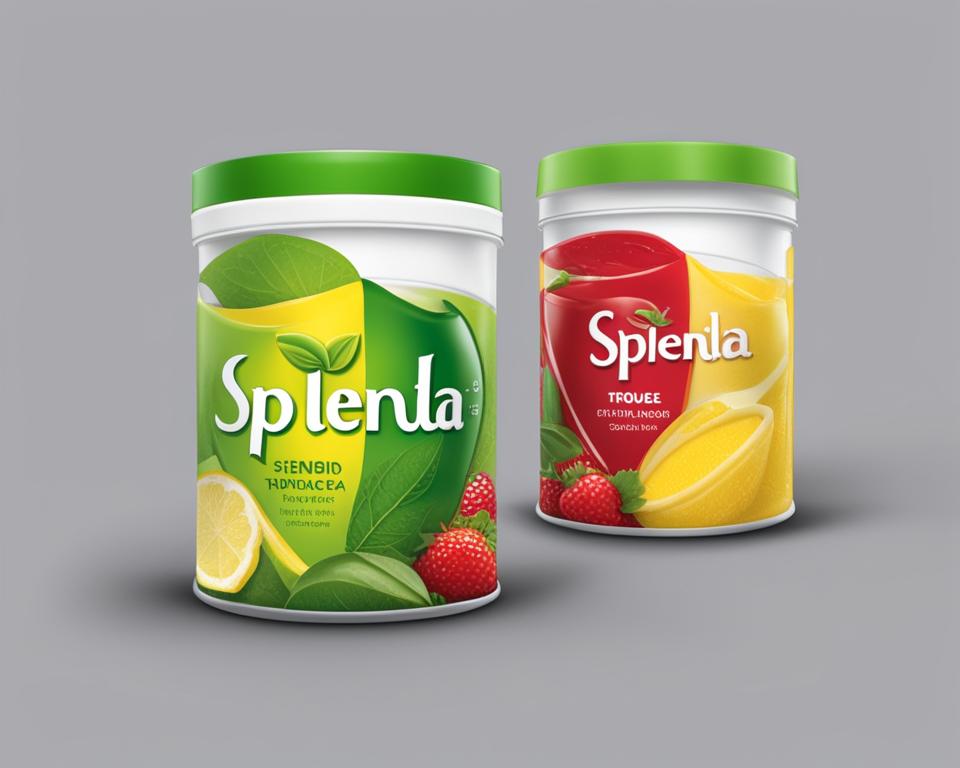
Key Takeaways:
- Splenda and Truvia are popular artificial sweeteners used as sugar substitutes.
- Splenda is made from sucralose, while Truvia is derived from the stevia leaf and contains erythritol.
- Taste preferences vary, with Splenda being described as bland and Truvia having a slightly bitter taste.
- Potential health impacts include side effects like skin rashes and migraines for Splenda, and digestive issues for Truvia due to erythritol.
- Choosing between Splenda and Truvia depends on personal preferences and specific health concerns.
What are Splenda and Truvia made of?
Splenda is made from sucralose, an artificial sweetener created by replacing three hydrogen oxygen groups with three chlorine atoms in sucrose (table sugar). This process gives sucralose its intensely sweet taste without adding any calories. Sucralose is about 600 times sweeter than sugar, so only a small amount is needed to achieve the desired sweetness.
On the other hand, Truvia is made from the stevia leaf, which comes from the plant “stevia rebaudiana.” The leaves undergo a process to extract and purify the sweet compounds, mainly steviol glycosides. Truvia also contains erythritol, a sugar alcohol found naturally in some food plants. Erythritol is used as a bulking agent to give Truvia a similar texture and volume to sugar.
While Splenda is an artificial sweetener, Truvia claims to be “natural.” However, it’s important to note that the FDA does not have a specific definition for the term “natural” on food labels. Both Splenda and Truvia are considered safe for consumption by the FDA when used in moderation.
| Artificial sweetener | Main Ingredients |
|---|---|
| Splenda | Sucralose |
| Truvia | Stevia leaf extract, erythritol |
“Splenda is made from sucralose, an artificial sweetener created by replacing three hydrogen oxygen groups with three chlorine atoms in sucrose.”
How do Splenda and Truvia taste?
When it comes to artificial sweeteners like Splenda and Truvia, taste is an important factor to consider. People have different preferences when it comes to sweetness and flavor. So, let’s take a closer look at how Splenda and Truvia taste.
The Taste of Splenda:
Splenda is known for its neutral or bland taste. Many people describe it as a subtle sweetness that doesn’t have a strong flavor. Some taste testers have even compared it to a paper or cardboard-like taste. However, the lack of strong flavor can be an advantage for those who prefer a sweetener that doesn’t overpower the taste of the foods or beverages it’s added to.
The Taste of Truvia:
Truvia, on the other hand, claims to have a great taste every time. It is made from the stevia leaf, which provides a natural sweetness. However, some taste testers have noted that Truvia can make coffee and certain fruits taste slightly more bitter compared to using sugar. It’s important to bear in mind that taste preferences may vary from person to person, and it’s worth trying both sweeteners to see which one suits your taste buds best.
Which One Should You Choose?
Choosing between Splenda and Truvia ultimately comes down to personal taste preferences. If you prefer a sweetener that is neutral and doesn’t have a strong flavor, Splenda might be the better option for you. On the other hand, if you prefer a sweetener that is more natural and provides a unique taste, Truvia might be worth a try. It’s important to remember that both sweeteners are calorie-free and can be used as a sugar substitute in various recipes.
So, take some time to experiment with both Splenda and Truvia to discover the taste that suits you best!
Health Impacts of Splenda and Truvia
When it comes to artificial sweeteners like Splenda and Truvia, it’s important to consider their potential health effects. While these sugar substitutes offer a low-calorie alternative to traditional sugar, they may not be without their drawbacks.
Splenda, which is made from sucralose, has been associated with several side effects. Some individuals have reported experiencing skin rashes, bloating, migraines, and even acne after consuming Splenda. However, it’s worth noting that the FDA considers Splenda safe for consumption.
On the other hand, Truvia, which is derived from the stevia leaf and contains erythritol, is classified as “Generally Recognized as Safe” (GRAS) by the FDA. However, some people may experience digestive issues, such as gas or bloating, when consuming erythritol-containing products.
Splenda Side Effects:
- Skin rashes
- Bloating
- Migraines
- Acne
Truvia Side Effects:
- Gas
- Bloating
It’s important to remember that the long-term health effects of these artificial sweeteners are still not fully understood. Individual experiences may vary, and it’s always a good idea to consult with a healthcare professional if you have any concerns. As with all things, moderation is key when it comes to using any sugar substitute.
| Artificial Sweetener | Health Benefits | Side Effects |
|---|---|---|
| Splenda | Low-calorie alternative to sugar | Skin rashes, bloating, migraines, acne |
| Truvia | Derived from a natural source (stevia leaf) | Gas, bloating |
Conclusion
When it comes to choosing the right sweetener, it’s important to consider your personal preferences and health concerns. Both Splenda and Truvia have their own unique characteristics that may impact your decision.
Splenda is an artificial sweetener made from sucralose, offering a bland taste that some may find less satisfying. Truvia, on the other hand, is made from the stevia leaf and has a slightly bitter taste that may not be to everyone’s liking.
In terms of health impacts, Splenda has been associated with side effects such as skin rashes and migraines, while Truvia may potentially cause digestive issues due to the presence of erythritol. However, it’s important to note that long-term studies on the health effects of both sweeteners are limited.
In the end, the best sugar substitute for you will depend on your taste preferences and any specific health concerns you may have. Remember to consume any sugar substitute in moderation as part of a balanced diet.
FAQ
Are Splenda and Truvia artificial sweeteners?
Yes, both Splenda and Truvia are artificial sweeteners commonly used as sugar substitutes.
What are Splenda and Truvia made of?
Splenda is made from sucralose, an artificial sweetener created by replacing three hydrogen oxygen groups with three chlorine atoms in sucrose (table sugar). Truvia is made from the stevia leaf, which comes from the plant “stevia rebaudiana.” Truvia also contains erythritol, a sugar alcohol found naturally in some food plants.
How do Splenda and Truvia taste?
Splenda is described as bland, with some even mentioning a paper or cardboard flavor. Truvia claims to have a great taste every time, although some testers note that it can make coffee and fruit taste slightly more bitter compared to sugar.
What are the potential health impacts of Splenda and Truvia?
Splenda has been associated with side effects such as skin rashes, bloating, migraines, and acne. Truvia, on the other hand, is classified as “Generally Recognized as Safe” (GRAS) by the FDA. However, as it contains erythritol, a sugar alcohol, it may cause digestive issues. It’s important to note that long-term studies on the health effects of both Splenda and Truvia are limited, and individual experiences may vary.
How do I choose between Splenda and Truvia?
The choice between Splenda and Truvia ultimately depends on personal preferences and any specific health concerns you may have. Consider factors such as taste, potential side effects, and individual health goals when making your decision.