Baby development milestones are exciting moments for parents as they witness their little ones grow and achieve new skills. One such milestone is when babies learn to sit up on their own. It’s an important step towards independence and sets the stage for further physical development. But when do babies sit up, and how can you help them reach this milestone?
Typically, babies start sitting up when they can hold their heads up without support and have enough upper body strength. Around 2 months of age, babies can usually hold their heads up, and by 4 months, they can hold their heads steady without support. At 6 months, babies begin to sit with a little help, and by 9 months, they can sit well without support. Finally, by 12 months, babies can sit up without any assistance.
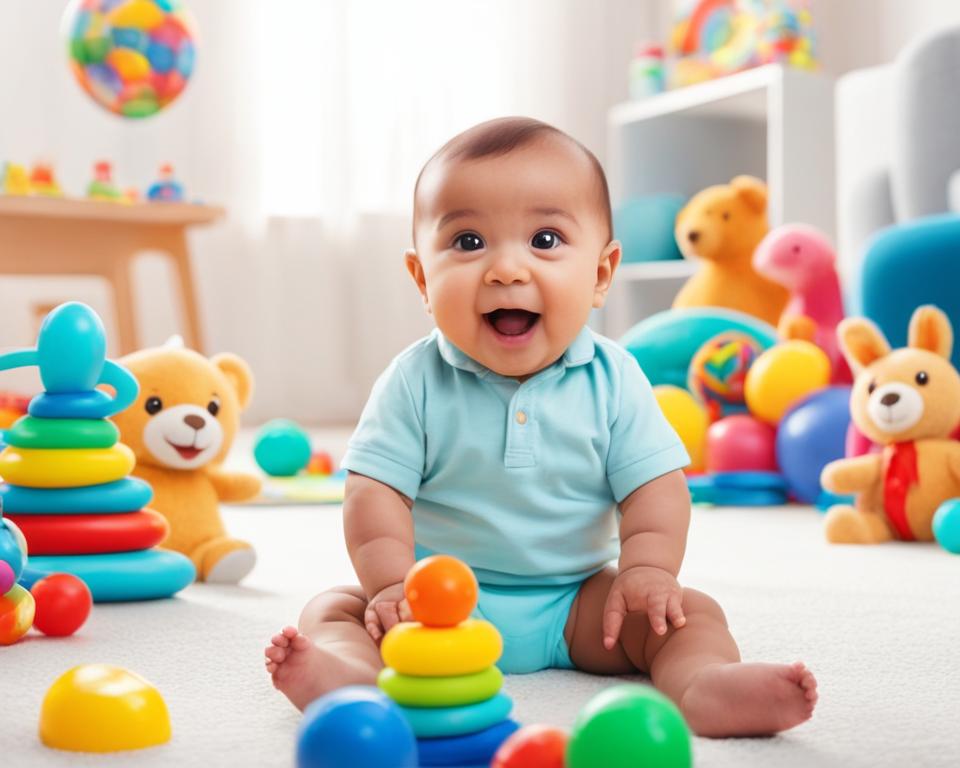
Key Takeaways:
- Babies typically start sitting up around 6-8 months of age.
- They develop the necessary strength and balance to sit up on their own.
- Tummy time and floor play with age-appropriate toys can help improve sitting skills.
- Signs that indicate your baby is ready to sit up include good head control and rolling over.
- Baby seats can provide support, but they should not replace independent practice.
How to Help Baby Sit Up
To help your baby develop the strength and balance to sit up, there are several techniques you can try. One effective method is to encourage tummy time, which helps strengthen the upper body and neck muscles necessary for sitting up.
During tummy time, lay your baby on their tummy on a soft surface, such as a blanket or play mat. This position promotes the development of core muscles and helps your baby gain better control over their head and neck.
Another way to assist your baby in sitting up is by providing support. You can use pillows or cushions placed behind your baby to offer stability and prevent them from falling. Gradually reduce the level of support as your baby gains confidence and develops stronger back muscles.
You can also help your baby sit up by placing them on your lap, facing outwards. Hold their hands or provide support at their hips while gently guiding them into a seated position. This allows your baby to practice sitting up with the assurance of your assistance.
Engaging in floor play with age-appropriate toys is also a great way to help improve your baby’s sitting skills. As they reach for toys placed within their reach, they will naturally engage their core muscles and work on their balance. Remember to always supervise your baby during playtime and ensure the toys are safe and suitable for their age.
| Tips to Help Baby Sit Up | Benefits |
|---|---|
| Encourage tummy time | – Strengthens upper body and neck muscles. – Improves head and neck control. |
| Provide support with pillows or cushions | – Enhances stability and prevents falls. – Builds confidence in sitting upright. |
| Assist baby on your lap | – Offers support and guidance. – Allows for practice in a controlled environment. |
| Engage in floor play with age-appropriate toys | – Develops core muscles and balance. – Encourages reaching and grasping skills. |
Signs of Baby Sitting Up
As your baby continues to grow and develop, there are several signs that indicate they may be ready to sit up independently. These signs show that their muscles and coordination are progressing, preparing them for this exciting milestone. Here are some of the key signs to look out for:
- Good head control: One of the first signs that your baby is ready to sit up is their ability to hold their head up steadily without support. This demonstrates that their neck and upper body muscles are getting stronger.
- Pushing up when lying face down: Another indication that your baby is developing the necessary strength is their ability to push themselves up when lying on their tummy. This action helps strengthen their core muscles, which are crucial for sitting up.
- Rolling over: Rolling from back to tummy and vice versa is a significant milestone. Babies who can roll in both directions are often close to sitting up independently. Rolling helps them develop the necessary balance and coordination for sitting.
- Tripod position: Babies who can sit up supported by their arms in a tripod position are showing promising signs of progress towards sitting up on their own. This position demonstrates their ability to lean forward and extend their arms for balance.
- Scooting: Some babies may start scooting back and forth before they can sit up independently. This movement shows that they are beginning to explore their surroundings and further developing their coordination skills.
Keep in mind that every baby develops at their own pace, so it’s important to be patient and allow them to reach this milestone in their own time. Providing a safe and supportive environment for your baby to practice their sitting skills is key. Now that you know the signs to watch for, you can encourage your little one along their sitting up journey.
When Do Babies Roll Over?
Babies reach an exciting developmental milestone when they start rolling over. This skill is an essential stepping stone on their journey towards independence and physical exploration. So when can you expect your little one to start rolling over?
Most babies begin rolling over as early as 4 months old. However, it’s important to note that every baby develops at their own pace, and some may start a little earlier or later.
Before babies can roll over, they often start by rocking from side to side. This rocking motion helps them build the necessary strength and coordination for rolling. By 6 months of age, babies typically roll over in both directions — from their backs to their tummies and vice versa.
During tummy time, babies have the opportunity to practice reaching for toys, which can also encourage rolling over. This activity strengthens their upper body muscles and helps develop the coordination needed for rolling.
To give you a comprehensive overview of the rolling-over milestone, here is a table summarizing the general timeline:
| Milestone | Age |
|---|---|
| Rocking from side to side | Around 4 months |
| Rolling over in both directions | Around 6 months |
| Rolling from tummy to back | Before rolling from back to tummy |
Babies develop at their own pace, so don’t be discouraged if your little one takes a bit longer to start rolling over. However, if you have any concerns about your baby’s development, it’s always best to consult with your pediatrician for personalized guidance and reassurance.
Next, we will explore another major milestone — crawling. Stay tuned for our next section!
When Do Babies Crawl?
As babies continue to reach their developmental milestones, crawling is an exciting stage that many parents look forward to. Crawling is typically a precursor to independent movement and exploration. So, when can you expect your little one to start crawling?
At around 6 months of age, babies begin to rock back and forth on their hands and knees, preparing their bodies for crawling. This rocking motion helps to build strength in their arms, legs, and core muscles, enabling them to push themselves forward. Some babies may initially start by crawling backward before they progress to moving forward.
By the time they are 9 months old, most babies are able to crawl and explore their surroundings. Crawling not only helps babies discover their environment but also allows them to develop their coordination, spatial awareness, and gross motor skills.
To encourage your baby to crawl, you can place toys just out of their reach to motivate them to move and explore. Creating a safe and stimulating environment for crawling, such as setting up cushioned areas with age-appropriate toys, can also provide the necessary encouragement.
Remember, every baby develops at their own pace, and some babies may skip crawling altogether and move straight to walking. If you have concerns about your baby’s crawling development, it’s always best to consult with your pediatrician for guidance.
The Benefits of Crawling
Crawling offers a range of benefits for your baby’s physical and cognitive development. Here are some key advantages:
- Gross motor skills development: Crawling helps strengthen your baby’s muscles, improving their coordination, balance, and overall physical development.
- Fine motor skills enhancement: As babies crawl, they learn to use their hands and fingers more effectively, improving their grip strength and hand-eye coordination.
- Spatial awareness and depth perception: Crawling allows babies to explore their surroundings and develop their understanding of space and depth.
- Cognitive development: As babies crawl, they begin to understand cause and effect, problem-solving skills, and spatial relationships.
Encouraging your baby to crawl and providing them with a safe and stimulating environment can promote their overall development and prepare them for the next exciting developmental milestones.
| Age | Developmental Milestone |
|---|---|
| 6 months | Baby starts rocking back and forth on hands and knees. |
| 9 months | Baby is able to crawl and move around independently. |
Connection Between Tummy Time and Sitting
Tummy time is a crucial activity for your baby’s development, especially when it comes to sitting up. By engaging in tummy time, your little one strengthens the back and neck muscles necessary for sitting independently. Starting with just a few minutes of tummy time a couple of times per day can gradually increase your baby’s endurance in this position, ultimately aiding their ability to sit up confidently.
You can make tummy time enjoyable for your baby by getting down on the floor with them and using a mirror. This not only provides a fun bonding experience but also encourages longer periods of tummy time. Babies are naturally drawn to their reflection, making the mirror a great incentive for them to engage in this essential activity.
| Tummy Time Tips |
|---|
| Start with short sessions of a few minutes and gradually increase the duration as your baby becomes more comfortable. |
| Place colorful toys or a textured mat in front of your baby to grab their attention and encourage active participation during tummy time. |
| Join your baby on the floor during tummy time and interact with them through gentle touch, talking, and singing. |
| Keep a close eye on your baby while they are on their tummy to ensure their safety and comfort. |
Remember, each baby develops at their own pace, so be patient and supportive throughout their sitting up journey. With consistent tummy time practice, you’ll be amazed at how your little one’s sitting skills progress over time.
Baby Seats and Sitting Up
When it comes to helping your baby learn to sit up, baby seats can be a useful tool. One popular option is the Bumbo Seat.
These seats are designed to provide support and stability for your baby as they practice sitting independently. However, it’s important to remember that baby seats should not be used as a substitute for the natural development of sitting skills.
Follow the instructions provided with the seat to ensure safe and correct usage. While the seat can offer support, it should not be relied upon as the sole means for practicing sitting. Babies need the opportunity to strengthen their muscles and develop their balance on their own.
If a baby is placed in a seated position too early or for extended periods of time, it can interfere with their natural progression towards sitting independently. It’s important to allow babies plenty of floor time for exploration and movement, which helps them develop the necessary strength and coordination for sitting up.
Safety Tips for Sitting Babies
As your baby becomes more mobile and starts sitting up, it’s crucial to prioritize their safety by implementing babyproofing measures in your home. By creating a safe environment, you can minimize potential hazards and ensure that your little one can explore and play without unnecessary risks.
Create a Safe Space
Here are some essential safety tips to consider:
- Use outlet covers to prevent your child from sticking their fingers or objects into electrical outlets.
- Secure heavy furniture, such as bookshelves and dressers, to the wall to prevent tipping.
- Install safety gates to block off stairs and other areas that may pose a risk.
- Lock cabinets and drawers that contain harmful substances or sharp objects.
- Keep choking hazards like small toys, coins, and buttons out of reach.
- Store cleaning products, medications, and other potentially dangerous items in locked cabinets.
Create a Safe Sleeping Environment
Ensuring a safe sleeping environment is also crucial for your sitting baby. Consider the following:
- Lower the mattress of the crib to its lowest position to prevent falls.
- Avoid placing pillows, stuffed animals, or other soft bedding in the crib that could pose a suffocation risk.
- Follow safe sleep guidelines by placing your baby on their back to sleep.
- Use a firm and well-fitting crib mattress.
| Hazard | Preventive Measure |
|---|---|
| Electrical outlets | Use outlet covers. |
| Toppling furniture | Secure heavy furniture to the wall. |
| Stairs | Install safety gates. |
| Unsafe objects | Lock cabinets and drawers storing harmful items. |
| Choking hazards | Keep small items out of reach. |
| Suffocation hazards | Avoid soft bedding in the crib. |
Remember, supervision is a critical aspect of ensuring your baby’s safety. Never leave your baby unattended in a potentially hazardous environment. By taking these precautions, you can create a secure space that enables your sitting baby to explore and thrive.
Conclusion
Sitting up is a significant milestone in a baby’s development that marks the beginning of a whole new world of play and exploration. While babies typically start sitting up between 6 and 8 months of age, it’s important to remember that every baby develops at their own pace.
Once your baby achieves the sitting up milestone, the next developmental milestones to look forward to include pulling up to a standing position, crawling, cruising furniture, and eventually taking their first steps. These milestones further enhance their mobility and independence.
It’s crucial to keep in mind that every baby is unique, and their development may vary. If you have any concerns about your baby’s development or if they don’t seem to be reaching these milestones within a reasonable timeframe, it’s always a good idea to consult with your pediatrician. They can provide guidance and reassurance based on your baby’s individual needs.
FAQ
When do babies start sitting up?
Babies typically start sitting up when they can hold their heads up without support and have enough upper body strength. By 2 months, babies can usually hold their heads up, and by 4 months, they can hold their heads steady without support. At 6 months, babies begin to sit with a little help, and by 9 months, they can sit well without support. By 12 months, babies can sit up without any assistance.
How can I help my baby sit up?
To help your baby develop the strength and balance to sit up, you can encourage tummy time, which helps strengthen the upper body and neck muscles. You can also assist your baby in sitting up by supporting them with pillows or helping them to sit on your lap. Engaging in floor play with age-appropriate toys can also help improve their sitting skills.
What are the signs that my baby is ready to sit up?
Signs that indicate your baby may be ready to sit up include good head control, pushing themselves up when lying face down, and rolling over. Babies who are able to tripod, leaning forward while extending their arms for balance, are also showing signs of progressing towards independent sitting. Other signs include the ability to roll in both directions and scooting back and forth.
When do babies start rolling over?
Babies start rolling over as early as 4 months old. They will first rock from side to side, which is the foundation for rolling over. At 6 months, babies typically roll over in both directions, and they may roll over from tummy to back before rolling over from back to front. Encouraging reaching for toys during tummy time can help promote rolling over.
When do babies start crawling?
Babies start rocking back and forth on hands and knees at around 6 months old, which is a building block to crawling. Some babies may start crawling backward before moving forward. By 9 months old, most babies are able to creep and crawl. Crawling can be encouraged by placing toys just out of reach and allowing babies to reach for them.
What is the connection between tummy time and sitting?
Tummy time is an important activity that helps strengthen the back and neck muscles needed for sitting up. Starting with a few minutes of tummy time a couple of times per day can gradually increase the time your baby spends in this position. Making tummy time enjoyable by getting down on the floor with your baby and using a mirror can help encourage longer periods of tummy time.
Can baby seats help with sitting up?
Baby seats, like the popular Bumbo Seat, can provide support for a baby to sit upright, but they should not be used as a substitute for practicing sitting independently. It is important to follow the instructions for using the seat correctly and not rely on it as the sole tool for practice. Placing your baby in a seated position too early or for long periods of time may interfere with their development of sitting skills.
What safety tips should I follow for a sitting baby?
As your baby becomes more mobile and starts sitting up, it is important to take steps to babyproof your home. This includes using outlet covers, securing furniture to the wall, locking cabinets and drawers that store unsafe items, and keeping choking hazards and dangerous items out of reach. Lowering the mattress of the crib and using safety belts on high chairs and other sitting devices are also recommended.
What are the next milestones after sitting up?
Sitting up is an important milestone in a baby’s development, and it opens up a whole new world of play and exploration. Babies typically start sitting up between 6 and 8 months of age, but every baby develops at their own pace. After sitting up, the next milestones to expect include pulling up to a standing position, crawling, cruising furniture, and taking their first steps. Remember that every baby is unique, and if you have concerns about your baby’s development, consult with your pediatrician.