Welcome to our exploration of bird types that start with the letter “I”! In this article, we will discover some fascinating avian species from around the world, including the Ibis, Ivory-billed Woodpecker, Indian Peafowl, Inca Tern, Imperial Shag, Indian Roller, Inaccessible Island Rail, and Island Thrush. These birds possess unique characteristics and are found in diverse regions, each offering its own charm and allure.
Key Takeaways:
- The Ibis is a family of birds known for their long legs, curved bills, and distinctive plumage. They inhabit wetlands and marshes worldwide.
- The critically endangered Ivory-billed Woodpecker, with its large size and ivory-colored bill, was once found in the southeastern United States and Cuba.
- The Indian Peafowl, also known as the Peacock, boasts iridescent blue and green plumage and is associated with beauty and opulence.
- The Inca Tern, a seabird found along the coasts of Peru and Chile, showcases its striking black body, white mustache, and bright red beak and feet.
- The Imperial Shag, or King Shag, is a cormorant species found in the Falkland Islands and South Georgia, admired for its black and white plumage.
Ibis
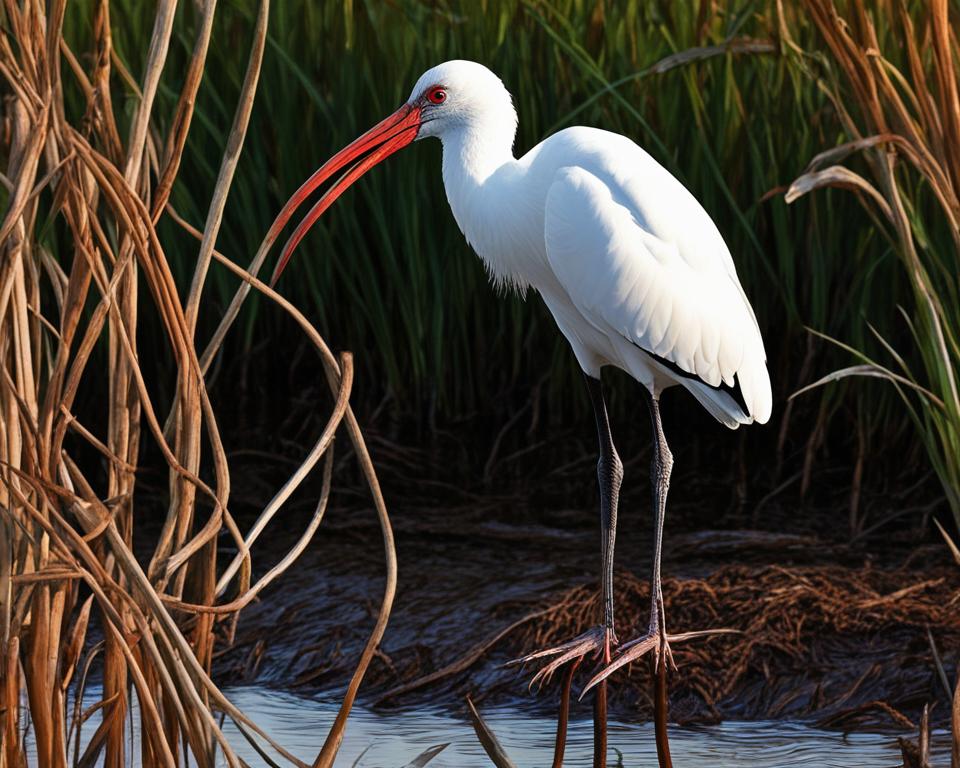
The Ibis is a type of bird that belongs to the family Threskiornithidae. These birds are known for their long legs, curved bills, and distinctive plumage. They can be found in wetlands and marshes throughout the world.
Species of Ibis:
- White Ibis
- Glossy Ibis
The Ibis is a fascinating bird with unique characteristics that adapt it to its wetland habitats. Its long legs enable it to wade through shallow water and search for food, while its curved bill is perfectly suited for probing the mud and catching small prey. The Ibis is truly a remarkable creature that showcases the wonders of nature.
Ivory-billed Woodpecker
The Ivory-billed Woodpecker is a critically endangered bird species known for its large size and distinctive ivory-colored bill. Once found in the southeastern United States and Cuba, it is now believed to be extinct or extremely rare, making conservation efforts crucial.
The Ivory-billed Woodpecker, scientifically known as Campephilus principalis, was one of the largest woodpecker species in the world. It measured approximately 20 inches in length and had a wingspan of about 30 inches. The male Ivory-billed Woodpecker had a striking appearance with its black plumage, white stripes on the neck, and the iconic ivory-colored bill.
This majestic bird primarily inhabited old-growth forests and bottomland hardwood forests, using its powerful bill to excavate cavities in trees for nesting and foraging. It relied on its bill to search for insects, larvae, and beetles within the bark and decayed wood. The bird’s unique bill structure allowed it to hammer against the trees with incredible force, producing loud and distinctive drumming sounds.
“The Ivory-billed Woodpecker was a true symbol of the rich biodiversity found in the forests of the southeastern United States. Its loss would be a tragic blow to our natural heritage.”
Due to habitat loss, particularly the clearing of forests and logging activities, the Ivory-billed Woodpecker population declined significantly over the years. Combined with hunting and the collection of specimens for museums and private collections, the bird eventually vanished from its known habitats.
Efforts are now underway to search for any remaining populations and protect their habitat through forest conservation initiatives. Scientists, ornithologists, and bird lovers around the world are collaborating to study historical records, conduct surveys, and employ innovative technologies in hopes of confirming the existence of the Ivory-billed Woodpecker and implementing effective conservation strategies.
Indian Peafowl
The Indian Peafowl, also known as the Peacock, is a large bird native to South Asia. It is known for its iridescent blue and green plumage and the extravagant display of its tail feathers during courtship. The Indian Peafowl is a symbol of beauty and is often associated with royalty and opulence.
This stunning bird is a member of the pheasant family and is characterized by its vibrant colors and striking appearance. The male peafowl, known as a peacock, is adorned with a long, brilliantly colored tail that features stunning “eye” markings. These feathers, called “train,” are raised and spread out in a fan shape during courtship displays to attract a mate.
The Indian Peafowl has captivated humans for centuries with its beauty and grace. It has been depicted in art, literature, and mythology, and is often considered a symbol of prosperity, love, and immortality. In many cultures, the peacock is believed to bring good luck and fortune.
“The Indian Peafowl is a true marvel of nature, enchanting observers with its majestic appearance and mesmerizing display of feathers. It is a testament to the wonder and diversity found in the avian world.” – Bird Watching Magazine
These magnificent birds are primarily found in forested areas, cultivated lands, and even near human settlements. They have adapted well to various habitats, including gardens and parks, where they forage for food and find shelter. Indian Peafowls are omnivorous, feeding on a diet of insects, plants, small mammals, and sometimes reptiles.
A Colorful Display
During the breeding season, male Indian Peafowls put on a breathtaking display to attract females. They raise their long, iridescent tail feathers and vibrate them, producing a low-frequency sound that adds to the spectacle. This visually captivating display, combined with their distinctive calls, is their way of courting potential mates and asserting dominance.
Conservation Efforts
The Indian Peafowl population is currently considered stable, with no major threats to its survival. However, continued habitat loss and poaching pose potential risks. Efforts are underway to protect and conserve these magnificent birds, including the establishment of protected areas and raising awareness about the importance of their conservation.
Inca Tern
The Inca Tern is a fascinating seabird that can be found along the coasts of Peru and Chile. With its distinctive features and remarkable abilities, it captures the attention of bird enthusiasts and nature lovers alike.
Recognized for its striking appearance, the Inca Tern boasts a sleek black body contrasted by a white mustache. However, its most eye-catching feature is undoubtedly its vibrant bright red beak and feet. These vivid colors make the Inca Tern an unmistakable sight in its coastal habitats.
But the Inca Tern is not only a beauty to behold, it is also a master diver. This seabird is known for its exceptional diving skills, effortlessly plunging into the ocean in search of its preferred prey – fish. It is often seen skimming the ocean surface, hunting and feeding on small fish that thrive in these coastal regions.
With its combination of striking looks and impressive abilities, the Inca Tern holds a special place among the seabird species of South America. Its presence along the coasts of Peru and Chile adds vibrancy to these marine ecosystems and offers a spectacle for bird enthusiasts and nature lovers.
Imperial Shag
The Imperial Shag, also known as the King Shag, is a fascinating species of cormorant that can be found in the Falkland Islands and South Georgia. These beautiful birds are known for their distinctive black and white plumage, which gives them an elegant appearance. With their long, slender necks, they gracefully navigate the waters in search of food.
The Imperial Shag is an exceptional diver, using its strong wings and webbed feet to propel itself underwater in pursuit of fish and other marine organisms. Their ability to dive to significant depths allows them to access a diverse range of prey, making them highly adaptable and successful hunters.
Key Characteristics of the Imperial Shag:
- Distinctive black and white plumage
- Long, slender neck
- Strong wings and webbed feet for efficient diving
The Imperial Shag’s elegant appearance and remarkable diving abilities make it an exceptional bird to observe in its natural habitat. Whether you’re an avid bird-watcher or simply enjoy the beauty of wildlife, encountering an Imperial Shag is an experience you won’t want to miss.
Indian Roller
The Indian Roller is a colorful bird found in the Indian subcontinent and parts of the Middle East. It captivates with its stunning mix of blue, green, and brown feathers, creating a truly mesmerizing sight. With a wingspan of around 14-17 inches and a length of 30-34 cm, this medium-sized bird captures the attention of bird enthusiasts and photographers alike.
The Indian Roller, scientifically known as Coracias benghalensis, belongs to the family Coraciidae. Its distinct feature is the unique rolling flight pattern it exhibits during hunting or territorial disputes. This aerial acrobatics, which includes mid-air somersaults, adds an element of grace and wonder to its already enchanting presence.
Did you know?
The Indian Roller has been designated as the state bird of three Indian states: Karnataka, Andhra Pradesh, and Telangana.
These birds prefer a habitat that includes open scrub, grassland, and agricultural areas, where they can easily spot their prey. Their diet mainly consists of insects, small reptiles, and occasionally small birds and rodents. They are excellent hunters, with their sharp eyesight and agile flight allowing them to catch their prey with precision and speed.
Conservation Status
The Indian Roller is listed as a species of “Least Concern” by the International Union for Conservation of Nature (IUCN). Its ability to adapt to various environments and its relatively stable population are the main contributing factors to this classification.
| Habitat | Conservation Status |
|---|---|
| Indian Subcontinent and Middle East | Least Concern |
Despite this favorable status, it is important to recognize the continued need for habitat conservation and protection against threats such as habitat loss and degradation. Efforts to promote awareness and preserve the natural ecosystems where the Indian Roller thrives are crucial for the long-term survival of this remarkable bird.
Fun Fact:
The Indian Roller has a distinctive call that can be described as a loud, harsh, and piercing “kreee-kreee.”
Next time you find yourself in the Indian subcontinent or the Middle East, keep an eye out for the Indian Roller. Its vibrant colors, aerial displays, and unique presence are sure to leave a lasting impression.
Inaccessible Island Rail
The Inaccessible Island Rail is a flightless bird species that is endemic to Inaccessible Island, a remote island in the South Atlantic Ocean. This bird has a small and stocky body, short wings, and a long, curved bill, making it highly adapted to its unique habitat.
Inaccessible Island is a volcanic island located around 2,200 kilometers from South Africa. It is a UNESCO World Heritage Site due to its significant biodiversity and the presence of many endemic species. The Inaccessible Island Rail is one of the rarest birds in the world, with an estimated population of only around 300 individuals.
This rail species has evolved to live in the dense vegetation of Inaccessible Island, where it forages for invertebrates and plant matter. Due to the inaccessibility of the island and the limited knowledge about the bird, there is still a lot to discover and study about its behavior and ecology.
The Inaccessible Island Rail faces several challenges to its survival, including habitat loss, predation by non-native species, and potential climate change impacts. Conservation efforts are crucial to protect and preserve this unique and vulnerable species.
Threats to the Inaccessible Island Rail
“The limited population size and restricted habitat range make the Inaccessible Island Rail particularly vulnerable to any disturbances or changes to its environment. Efforts should be made to minimize habitat destruction and prevent the introduction of invasive species.”
| Threat | Impact |
|---|---|
| Habitat Loss | The clearing of vegetation and disturbance of nesting sites can reduce the available habitat for the Inaccessible Island Rail. |
| Predation by Non-Native Species | Invasive predators, such as rats or cats, can pose a significant threat to the rail’s eggs, chicks, and adults. |
| Climate Change | Rising temperatures, altered precipitation patterns, and sea-level rise may impact the rail’s habitat and food availability. |
Efforts are underway to conserve the Inaccessible Island Rail and its unique habitat. These include the implementation of invasive species control programs, habitat restoration initiatives, and long-term monitoring to better understand the bird’s population dynamics and behavior.
By protecting the Inaccessible Island Rail, we can help preserve the biodiversity of this remote island and contribute to the conservation of a globally important bird species.
Island Thrush
The Island Thrush, also known as the Eurasian blackbird, is a delightful species of thrush found on various islands in the Atlantic Ocean, including the Azores and Canary Islands. With its sleek black plumage and vibrant yellow beak, the Island Thrush stands out against the natural beauty of its surroundings.
This charming bird is known for its melodious song, which fills the wooded areas where it resides. The Island Thrush’s enchanting vocalizations create a serene ambiance, truly a treat for nature enthusiasts and birdwatchers alike. Its beautiful voice has earned it a special place in folk songs and poetry throughout the ages.
With a preference for wooded habitats, the Island Thrush can often be spotted in lush forests and gardens, foraging for insects, worms, fruits, and berries. Its graceful movements and keen eye for food make it a fascinating creature to observe. Along with its lovely song, the Island Thrush’s foraging behaviors contribute to the delicate balance of island ecosystems.
FAQ
What are some bird types that start with I?
Some bird types that start with I include the Ibis, Ivory-billed Woodpecker, Indian Peafowl, Inca Tern, Imperial Shag, Indian Roller, Inaccessible Island Rail, and Island Thrush.
What are the characteristics of the Ibis?
The Ibis is known for its long legs, curved bill, and distinctive plumage. It belongs to the family Threskiornithidae and can be found in wetlands and marshes worldwide.
Is the Ivory-billed Woodpecker endangered?
Yes, the Ivory-billed Woodpecker is considered critically endangered and is believed to be extinct or extremely rare. Efforts are being made to protect any remaining populations.
Where is the Indian Peafowl native to?
The Indian Peafowl, also known as the Peacock, is native to South Asia. It is known for its vibrant plumage and extravagant display of tail feathers during courtship.
Where can the Inca Tern be found?
The Inca Tern is found along the coasts of Peru and Chile. It is known for its distinctive appearance, remarkable diving skills, and feeding habits near the ocean surface.
What is unique about the Imperial Shag?
The Imperial Shag, also known as the King Shag, is a species of cormorant found in the Falkland Islands and South Georgia. It has a black and white plumage and is an excellent diver, feeding on fish and marine organisms.
Where is the Indian Roller commonly found?
The Indian Roller is a colorful bird found in the Indian subcontinent and parts of the Middle East. It is known for its acrobatic flight patterns and displays, including mid-air somersaults.
What is unique about the Inaccessible Island Rail?
The Inaccessible Island Rail is a flightless bird species endemic to Inaccessible Island in the South Atlantic Ocean. It has a small, stocky body and is highly adapted to its remote habitat.
Where can the Island Thrush be found?
The Island Thrush, also known as the Eurasian blackbird, is found on various islands in the Atlantic Ocean, including the Azores and Canary Islands. It is known for its melodious song and is often seen in wooded areas.